
Digital Punch Cards vs Paper: Which One Actually Gets Customers to Return?
.avif)
Loyalty cards have long been a go-to strategy for boosting customer retention. For decades, paper punch cards offered a simple way to incentivise return visits — "Buy 9 coffees, get the 10th free." But in a world dominated by smartphones and data-driven marketing, many small businesses are asking: Are paper punch cards still effective? Or are digital loyalty cards for small businesses now the better choice for driving customer retention?
In this article, we compare how paper and digital punch cards work, where each approach fits, and what businesses should consider when choosing a loyalty program. We’ll also look at how digital platforms such as Stamp Me add customer insights, engagement tools and more flexible reward management to the traditional punch-card model.
.avif)
How Do Paper Punch Cards Work?
Paper punch cards remain a straightforward loyalty option. They’re inexpensive to produce, familiar to customers and require very little setup. Their main limitation is that the loyalty relationship exists almost entirely on the physical card, giving businesses limited visibility into customer activity or opportunities to re-engage members between visits.
Things to consider with paper punch cards:
- Lost or forgotten: According to a Statista report, 39% of customers abandon paper loyalty programs because they misplace their cards.
- Limited customer tracking: Businesses generally can’t see individual visit frequency, reward progress or redemption behaviour from a paper card alone.
- Limited between-visit engagement: A physical card doesn’t itself provide a channel for reminders, promotions or personalised messages.
- No data = no insight: There’s no way to track redemptions, active users, or ROI — making it hard to measure what’s working.
For small businesses, this means wasted opportunities. You’ve invested in loyalty, but you’re missing out on powerful ways to nudge repeat visits.
How Do Digital Punch Cards Work?
Digital punch cards move reward tracking into a digital loyalty experience. Depending on the platform, this can give businesses additional capabilities such as customer activity tracking, digital reward progress, targeted communications and campaign automation.
Why businesses choose digital punch cards:
- Automated tracking: Each stamp and redemption is recorded in real time.
- Push notifications: Send gentle nudges when a customer hasn’t visited in a while or is one stamp away from a reward.
- Customer engagement tools: Communicate with loyalty members through supported campaigns, invitations and messaging tools.
- Analytics & insights: Understand customer habits, top performers, and campaign effectiveness.
- Reward validation: Digital validation methods can help reduce duplicate redemptions and unauthorised stamping.
Today’s customers are used to doing everything on their phones. A digital loyalty card meets them where they are — no paper, no plastic, no hassle.
For businesses that want more than simple reward tracking, digital loyalty can provide a broader retention toolkit. The value comes from being able to understand loyalty activity, communicate with members and adapt campaigns over time rather than relying solely on a physical card.
Customers expect convenience, automation, and instant access. Sticking with paper risks making your brand look outdated and worse, could cost you repeat visits to a nearby competitor who does offer a seamless digital experience.
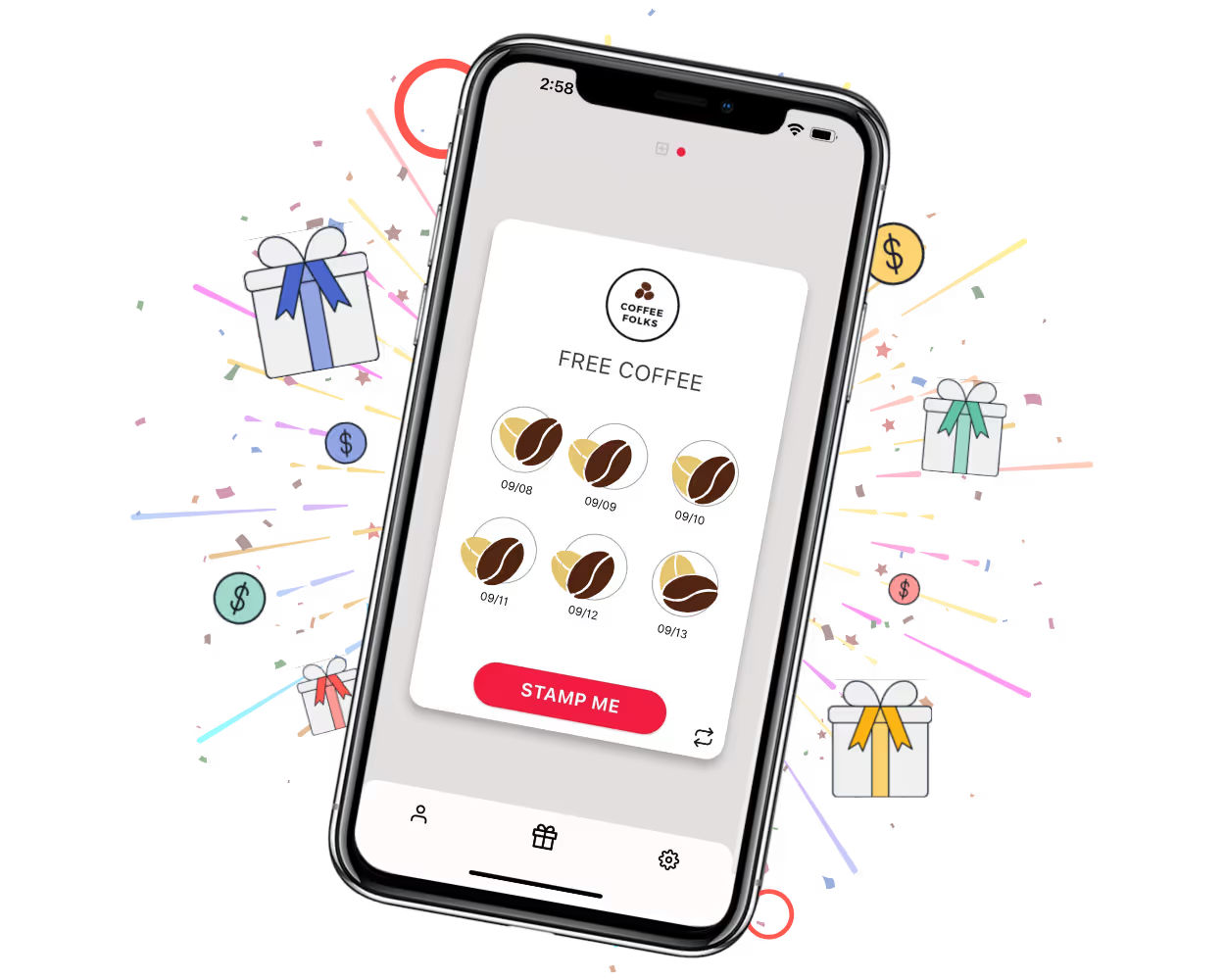
Loyalty Punch Card Effectiveness: What Really Gets Customers to Return? (The Psychology Behind It)
When it comes to loyalty programs, functionality matters but psychology wins.
Digital platforms can make several established loyalty mechanics easier to apply consistently because reward progress and customer activity can be tracked digitally.
Goal Gradient Effect:
Both paper and digital punch cards can make progress toward a reward visible. Digital platforms can add automated reminders or milestone messaging when customers are close to completing their card.
Loss Aversion:
When people feel like they’re about to lose progress, they’re more likely to act. A push notification saying “You're just 1 visit away!” plays directly into this powerful psychological driver.
Consistency Bias:
Customers want to remain consistent with their past behavior. A digital app tracks their activity, gently reinforcing the routine of coming back.
Recency Bias:
Digital loyalty platforms can automatically re-engage inactive members. A paper card stuck in a drawer can’t do that.
Stamp Me incorporates all of these — with features like automated reminders, stamp progress visuals, and milestone incentives to keep customers returning.
.avif)
When Might Paper Punch Cards Still Be a Good Fit?
- very simple programs
- short-term events/pop-ups
- businesses deliberately avoiding digital customer data collection
- environments where customers strongly prefer physical cards
Paper can still work well when the goal is simply to recognise repeat visits. Digital becomes more useful when the business also wants customer insights, communication tools or campaign automation.
Use Case: A Butcher That Switched to Stamp Me
Millin’s Free Range Butcher, a busy independent butcher shop in Sydney, Australia, transitioned from a traditional paper-based system to Stamp Me’s digital loyalty platform in early 2024 — and hasn’t looked back.
Since launching their program, they’ve built a thriving loyalty base of over 600 active members, with new customers continuing to join each week.
What made the difference?
- StampPod™ device: The StampPod™ gives staff a quick, consistent way to validate stamps at the counter without manually entering customer details.
- Free stamp on sign-up: New customers are instantly rewarded, encouraging opt-ins and creating a feel-good first impression.
Beyond the basics, Millin’s has also embraced advanced digital features that simply aren’t possible with paper punch cards:
- Birthday Club: Customers automatically receive a personalised push notification and a 5% discount for any purchase made on their birthday. It’s a low-effort, high-impact gesture that builds emotional loyalty.
- Double Stamp Wednesdays: Traditionally a slower day for business, Wednesdays have become a loyalty-driving success. Members who spend over $35 on this day receive two stamps instead of one, incentivising mid-week visits.
“We’ve seen a real shift in shopping habits,” says business manager Angie Millin. “Customers now plan their visits around Wednesdays to get the extra stamp. It’s definitely created an uptick in sales and energy mid-week.”
Why digital mattered:
The digital setup gave Millin’s capabilities that a standalone paper card could not provide, including automated birthday rewards, digital stamp validation and targeted customer promotions.
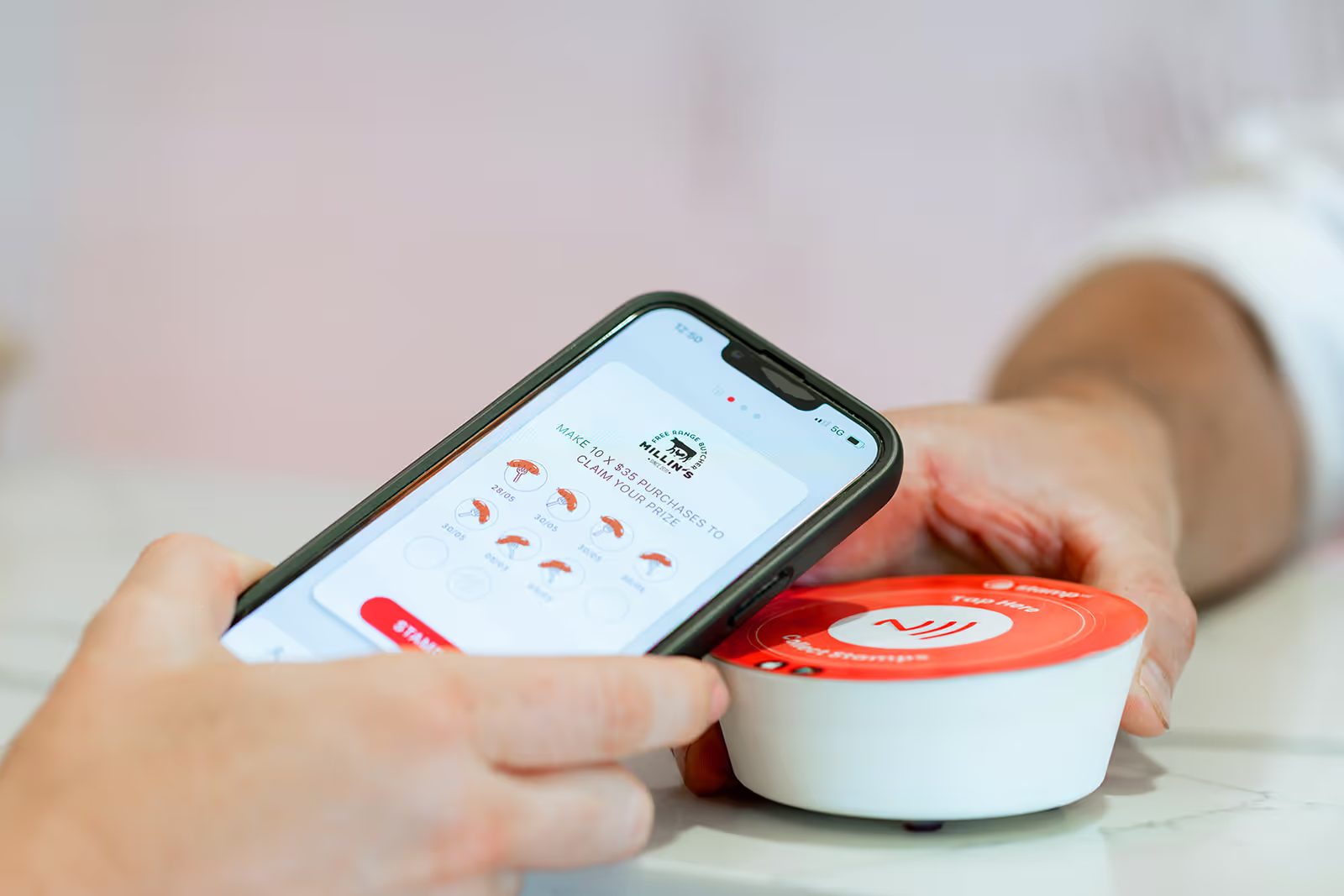
Side-by-Side: Paper vs Digital Punch Cards
How to Make the Switch (Without Losing Customers)
Worried your customers won’t follow you from paper to digital? Here’s how to transition smoothly:
1. Announce the change clearly
Use signage, social media, and staff to explain that your loyalty program is going digital.
2. Offer a migration reward
Allow customers to transfer a few paper stamps to their new digital card or give them a bonus stamp just for switching.
3. Train your team
Make sure staff know how to validate stamps and answer basic customer questions.
4. Promote your program
Use email invites, QR codes at the counter, and email campaigns to get the word out. Stamp Me includes tools to help automate this process.
5. Stay consistent
Don’t run both programs long-term. Pick a date to fully move over and celebrate the switch.
Conclusion: Ready to Upgrade Your Loyalty Program?
For businesses that only want a simple way to recognise repeat visits, paper punch cards can still do the job. Digital punch cards become more valuable when the goal is to combine rewards with customer insights, communication and ongoing retention campaigns.
Stamp Me is designed for businesses that want to keep the familiar stamp-card model while adding digital reward tracking, customer engagement and campaign tools.

Enter a few details based on typical customer behaviour to estimate the revenue uplift and ROI a loyalty program could deliver.





.webp)