
Best Loyalty Apps for Restaurants in the USA (2026)

Most restaurant loyalty tools in the US are POS add-ons — which means choosing one quietly locks you into a payment ecosystem. This guide compares four platforms on real current pricing, contract terms, and what happens if you ever switch systems.
TL;DR
- Loyalty program members now represent 39% of all US restaurant visits, up from under 20% five years ago
- Most loyalty tools marketed to US restaurants are POS add-ons — which restricts features and creates switching risk
- Toast loyalty isn't sold standalone; realistic all-in cost is $250–350/month
- Square fees stack per location with no volume discount
- POS-independent platforms like Stamp Me keep your customer data yours regardless of what POS you use
- Every price in this guide was verified directly against current vendor pricing pages

How We Priced This
We verified every price in this guide directly against each vendor's current pricing page, pricing on all four platforms changes periodically so we suggest double-checking before committing to an app.
[IMAGE 1 — Hero]
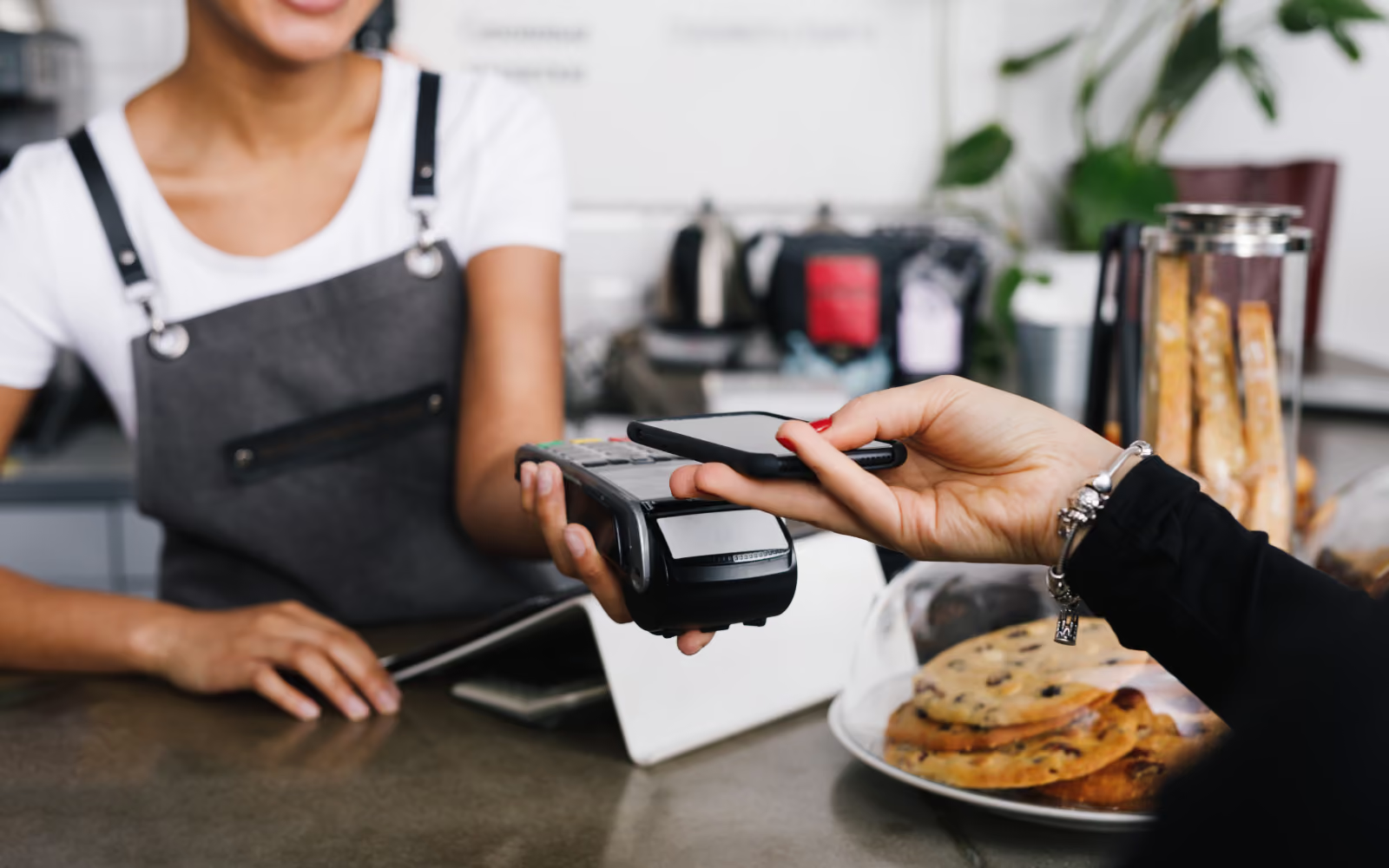
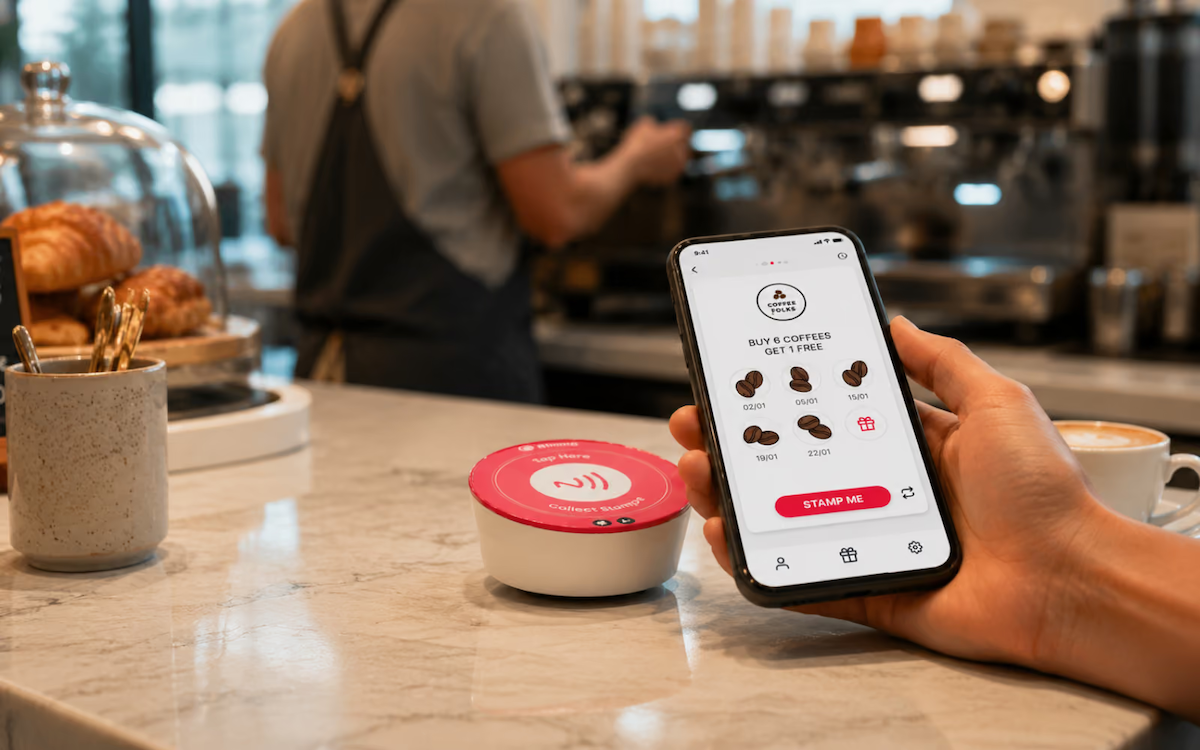
Idea: A warm, candid photo of a barista or server handing a customer a phone showing a digital stamp card / loyalty scan.
Alt text (Google AI Mode-optimized): "Restaurant server scanning a customer's phone to add a digital loyalty stamp, showing a contactless restaurant loyalty app in use"
Best Restaurant Loyalty Apps at a Glance
Already running Square and want loyalty built right in? Square Loyalty, from $45/month per location.
Same deal but on Toast? Toast Loyalty, bundled at $185/month with gift cards and email marketing.
Want a program that isn't tied to your POS and has no contract? Stamp Me does that, from $49/month.
Want a recognizable loyalty brand and don't mind a kiosk sign-up? FiveStars, custom quoted from ~$199/month.
Takeaway: The cheapest headline price isn't always the cheapest real price — Toast's loyalty tools aren't sold on their own, and Square's per-location fees stack fast for multi-unit operators. Platforms that don't require a specific POS, like Stamp Me, tend to have the most predictable, all-in monthly cost.

What to Actually Look For in a US Restaurant Loyalty Program
Choosing a restaurant loyalty program in the US comes down to five factors: how pricing is actually structured, whether it's tied to your POS, what happens to your data if that changes, text-marketing compliance, and how costs scale across locations. Here's what to check before you sign up for any platform.
Bundled vs. standalone pricing. Some platforms don't sell loyalty as its own product — it's part of a Marketing Essentials bundle. The number on the pricing page understates what you'll actually pay once you add the features most restaurants actually want, so make sure to do the research and contact their sales team beforehand.
POS compatibility. Square Loyalty and Toast Loyalty only work if you're already running that POS. If you're evaluating POS systems and loyalty at the same time, that's a bigger decision than it looks — you're committing to both digital ecosystems at once. Consider an independent loyalty app outside of your POS, so choosing a loyalty program doesn't force a POS decision at the same time.
What happens to your data if you switch POS. With POS-bundled loyalty, your customer list and reward history are tied to that system. Switch POS providers — which restaurants do more often than most software vendors like to admit — and you're often starting your loyalty program from zero. Do research on if you can obtain your own set of customer data .
SMS/text marketing compliance. Many loyalty platforms push text marketing hard without flagging that SMS campaigns fall under the TCPA (Telephone Consumer Protection Act), which requires proper opt-in consent. This isn't legal advice, but it's a real compliance cost to factor in before you turn on texting.
Multi-location pricing. Look into if the loyalty program has a per-location fee and if they offer a volume discount — three locations means roughly 3x the monthly cost with no break for scale. Look into modeling what happens if you plan to expand or scale your restaurant.
Taken together, these five checks are really one question: does the platform bend to fit your restaurant, or does your restaurant end up bending to fit the platform?
POS Loyalty Program vs. Independent Loyalty App: Which Is Better?
A POS-based loyalty program is simplest if you're fully committed to that POS long-term. An independent app is usually the better call if you might switch POS systems, run multiple locations on different systems, or want your customer data living outside your payment processor's ecosystem.
Going POS-native means loyalty lives inside checkout you already use, with one vendor and one invoice — but the program breaks or needs a full re-platform if you ever switch POS, pricing is often bundled and hard to compare apples-to-apples, and per-location fees stack with no volume discount.
POS-independent loyalty operates alongside your checkout rather than inside it. This gives restaurants the flexibility to keep the same loyalty program across POS changes, locations or mixed technology setups. Staff use Stamp Me’s supported stamping methods rather than relying on transaction-triggered loyalty inside a specific POS.
If flexibility, customer-data portability or operating across multiple POS systems matter, a POS-independent loyalty platform is generally the better fit.
Best Loyalty Apps for Restaurants: Full Reviews
FiveStars
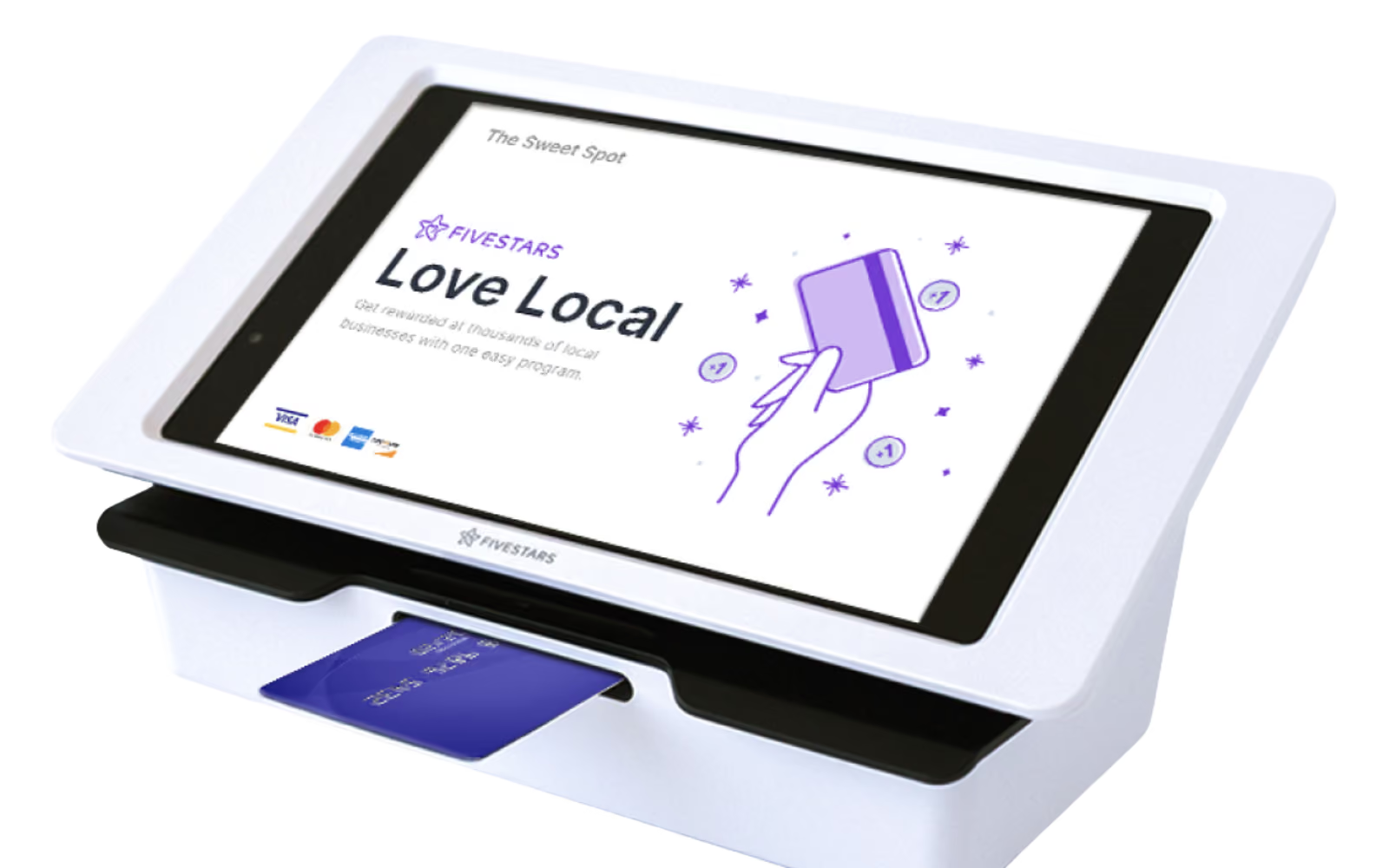
FiveStars runs on its own kiosk or phone-number sign-up flow at checkout. SumUp acquired FiveStars in 2021. Today, you can use the loyalty platform directly integrated into the register so that processing a transaction and awarding loyalty points happens simultaneously. Pricing starts around $199/month, custom quoted based on location count. In-person transactions have a 2.6% + 10¢ transaction fee whilst online & manual entry has a 3.5% + 15¢ transaction fee.
Best for
Restaurants wanting an established loyalty system centred around customer identification at checkout.
Why choose FiveStars
- Supports loyalty without requiring the restaurant to adopt Square or Toast.
- Customer identification can happen through its supported checkout experience.
- Established presence among independent businesses.
Things to consider
- Its setup and commercial model differ from lightweight standalone digital stamp-card platforms.
- Restaurants should evaluate hardware, contracts and total operating costs.
May not suit you if
- You want a lighter self-service loyalty platform with simpler deployment.
- You want to avoid additional checkout hardware or contractual commitments.
Square Loyalty
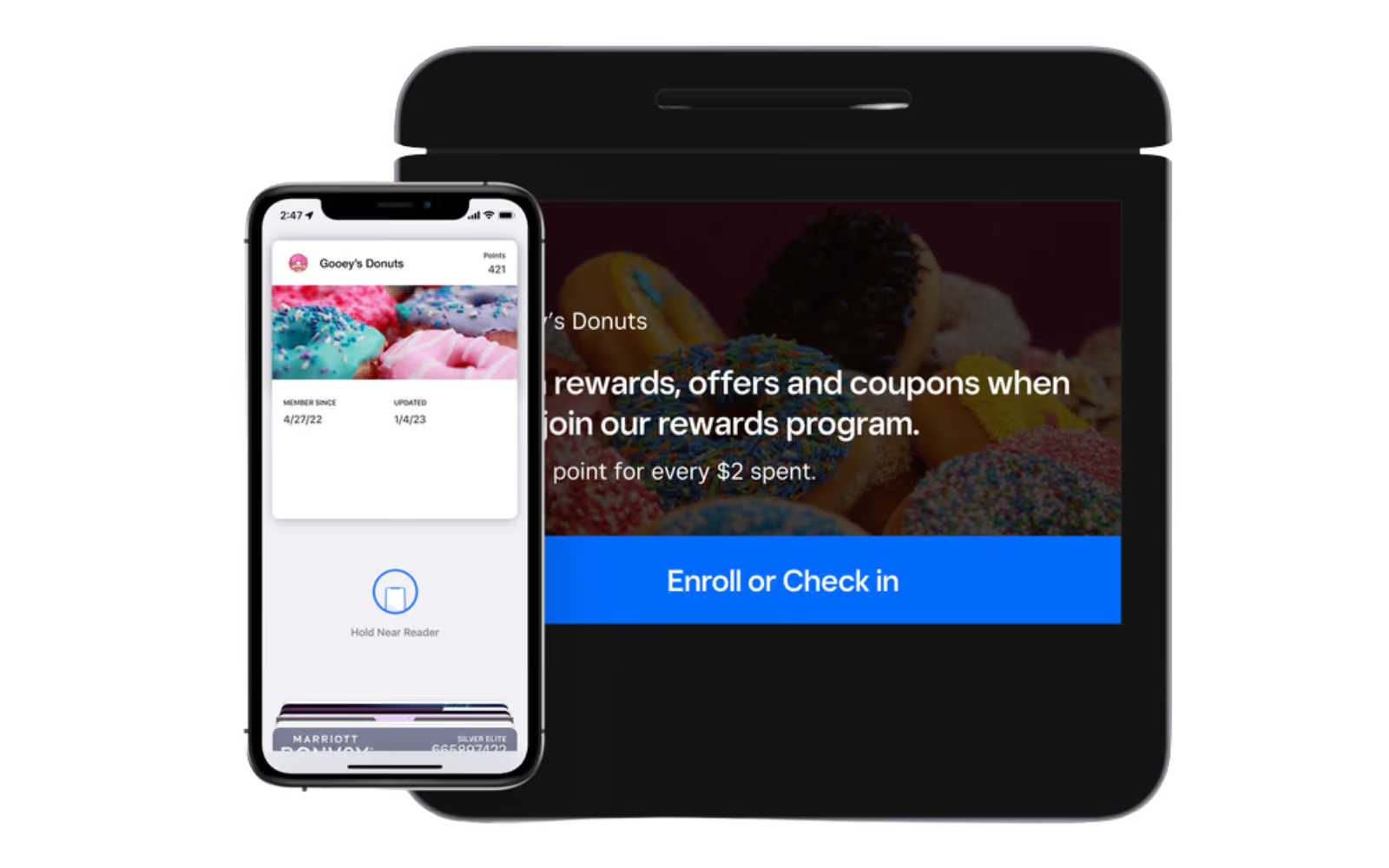
Square Loyalty lives inside the Square POS checkout flow. Pricing runs $45–$105/month per location depending on visit volume, with no discount for multiple locations.
Best for
Single-location restaurants already committed to Square POS.
Why choose Square Loyalty
- Loyalty operates within the existing Square checkout environment.
- Customer and transaction activity can be managed through the same ecosystem.
- Straightforward fit for businesses already using Square across payments and POS.
Things to consider
- The loyalty program is closely tied to the Square ecosystem.
- Costs can increase as locations or additional Square services are added.
May not suit you if
- You use another POS.
Toast Loyalty
Toast doesn't sell loyalty as a simple add-on you switch on for a flat fee. It ships bundled into the "Marketing Essentials" package at $185/month, which includes gift cards and email/SMS marketing whether you want them or not. A standalone subscription does technically exist, if you contact Toast Care directly, with pricing handled through sales rather than published.
Best for
Restaurants already operating within the Toast restaurant-management ecosystem.
Why choose Toast Loyalty
- Loyalty can work alongside Toast POS, payments and restaurant-management tools.
- Designed specifically around restaurant workflows.
- Useful for businesses wanting operational and loyalty tools within one ecosystem.
Things to consider
- Loyalty is closely tied to Toast’s broader software stack.
- Restaurants should compare the full platform cost rather than evaluating loyalty as an isolated subscription.
May not suit you if
- You don’t use Toast.
- You want loyalty to remain independent of your restaurant-management platform.
Stamp Me
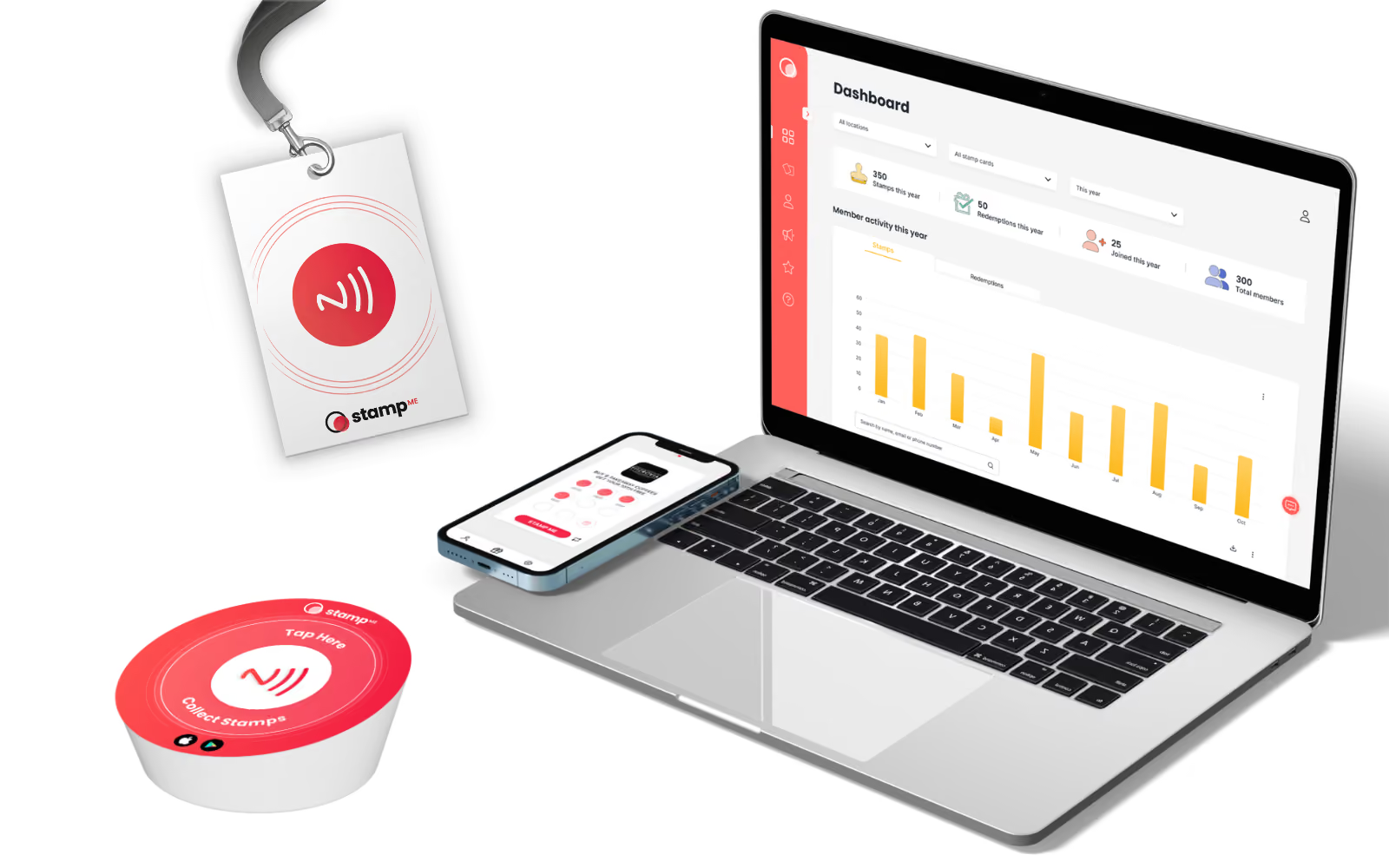
Stamp Me runs independently of your POS — customers collect digital stamps through the Stamp Me app, a QR code, or an optional tap device, and redeem rewards without any POS integration required. Pricing runs $49/month (Lite) to $99/month (Pro) to $199/month (Elite).
Best for
Independent and multi-location restaurants that want loyalty to remain separate from their POS provider.
Why choose Stamp Me
- POS-independent loyalty that works alongside the restaurant’s existing checkout setup.
- Loyalty can remain in place if the restaurant changes POS providers.
- Customer data stays associated with the loyalty platform rather than being dependent on one payments ecosystem.
- Supports digital stamp cards, rewards, customer insights and engagement campaigns.
- Suitable for businesses using different systems across locations.
Things to consider
Stamp Me is a dedicated loyalty platform rather than a loyalty module embedded directly into a POS.
May not suit you if
You specifically want earning and redemption to happen automatically inside your existing POS workflow.
Which Loyalty Program Should You Choose?
- Choose FiveStars if you want a recognizable loyalty network and don't mind an annual contract.
- Choose Square Loyalty if you're fully on Square and want the simplest possible setup.
- Choose Toast Loyalty if you're already deep in the Toast ecosystem and the bundle pricing works for your budget.
- Choose Stamp Me if you want predictable, contract-free pricing and a program that keeps working no matter what POS you use today or switch to later.
Ready to Launch a Loyalty Program That Isn't Tied To Your POS?
FiveStars, Square, and Toast each work well enough if you're settled on a POS long-term and comfortable with the contract terms that come with it. But the real cost of bundled loyalty tools often shows up later — when you switch POS providers or add a location on a different system.
Stamp Me skips that trade-off entirely: no contract, no POS lock-in, and pricing that stays the same whether you're on Square today and Toast next year. Start using a digital stamp card with your customers in minutes.

Enter a few details based on typical customer behaviour to estimate the revenue uplift and ROI a loyalty program could deliver.





.webp)