
Loyalty Programs for Restaurants: What Works and What Doesn't
TL;DR: A restaurant loyalty program isn't a coffee shop stamp card. Restaurants see lower visit frequency and higher order values — which means rewards need different thresholds, simpler mechanics, and a genuine reason for customers to return. This guide covers what works, what doesn't, and how to measure it.
Restaurants face a retention challenge that cafes simply don't. A regular cafe customer might visit five times a week — a restaurant customer might visit five times a year. That changes everything. Every return visit carries more weight, every lapsed customer costs more to recover, and every discount you give eats further into an already tight margin.
That's why a restaurant loyalty program can't just be a digital version of a paper stamp card. It needs to be built around how your customers actually dine: less frequently, with higher emotional investment, and with higher average spend. Done right, it builds habits, increases lifetime value, and gives customers a genuine reason to choose you over the place down the street.
This guide covers the reward structures that work, the mistakes that can sink programs, and how to measure whether yours is actually performing.
What is the Best Restaurant Loyalty Program for Independent Restaurants?
A visit-based program with a low stamp threshold (7–10 visits), a generous main reward, and interim rewards along the way consistently outperforms single-reward programs and points systems for independent restaurants.
The key structural decision is whether to reward spend or visits. For restaurants, visit-based programs win — they're simpler to explain, easier for staff to operate, and they directly incentivize the behavior you want: coming back.
The threshold matters enormously. Set it too high and customers disengage before they ever earn anything. For a restaurant someone visits once or twice a month, a stamp card with interim rewards keeps motivation high throughout the journey — rather than asking customers to stay engaged for six months before seeing any benefit.
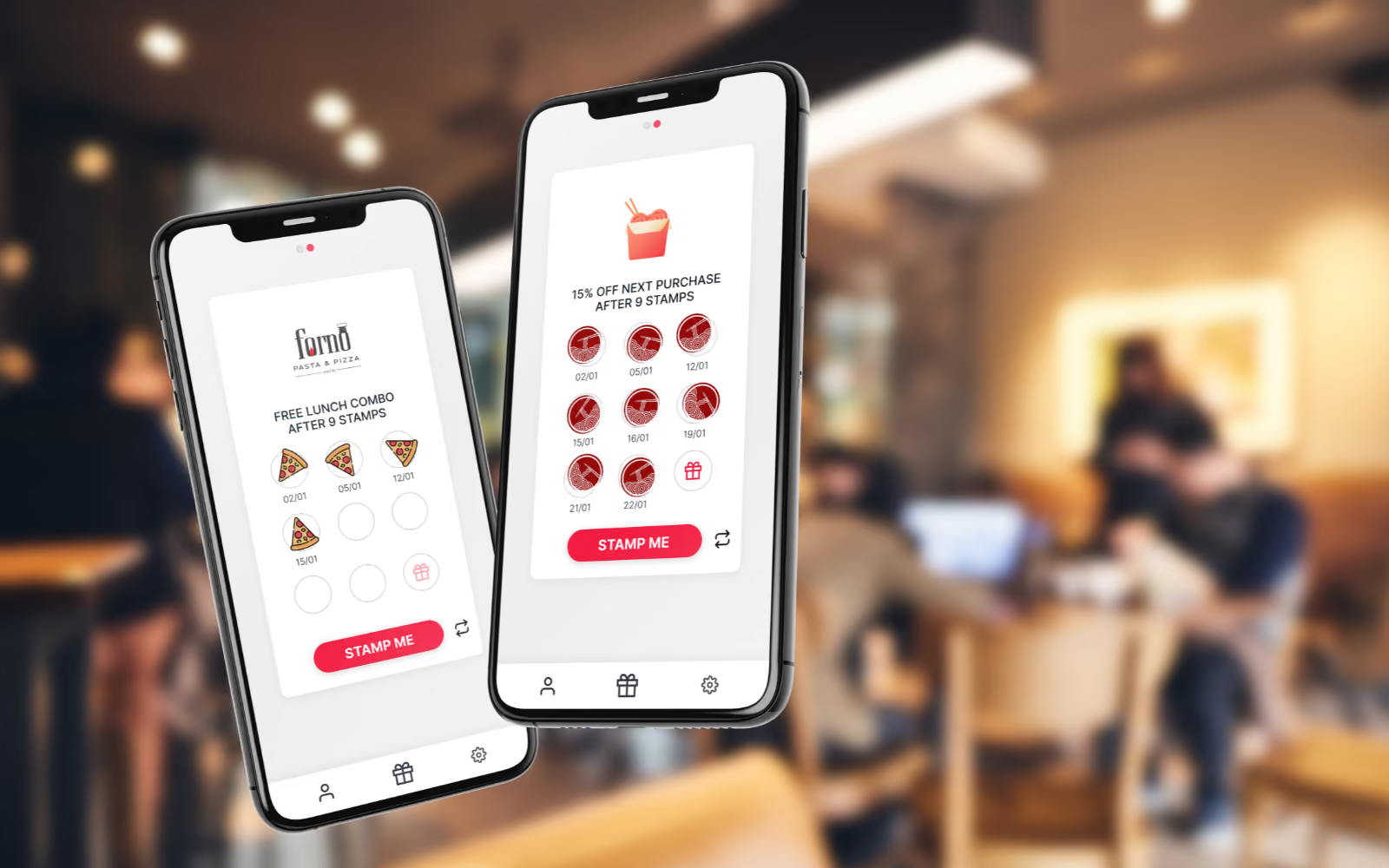
Motte's Cafe Verde Real Mexican in Alberta, Canada does this well. Their Stamp Me program has a 12-stamp main reward (a free enchilada meal), but builds in interim milestones so customers are rewarded along the way:
- 3 stamps → 10% discount
- 6 stamps → free soda
- 9 stamps → free chips & salsa
- 12 stamps → free enchilada meal
They also include a sign-up reward — a 10% discount voucher — so new members see immediate value the moment they join. The result: over 400 active loyalty members and a program that reinforces the restaurant's brand identity at every touchpoint.
An independent restaurant loyalty program doesn't need to be complex. It needs to be attainable, clearly structured, and worth talking about.

How Do Restaurant Loyalty Programs Increase Repeat Customers?
Loyalty programs increase repeat visits by creating a progress dynamic — customers return not just because they enjoy the restaurant, but because they're working toward something. That shifts dining from a one-off decision into a habit.
This is the psychology behind why multi-reward structures outperform single-reward programs. When a customer earns a free soda at stamp 6, they don't just feel rewarded — they feel closer to the main reward. That sense of momentum is what drives the next visit.
Beyond individual visits, a well-run program raises customer lifetime value in three ways: members visit more frequently, they tend to spend normally (rather than seeking a discount), and they become advocates who bring new guests. A table of four where one person is close to their reward often means the whole group chooses your restaurant that night.
Restaurant customer retention through loyalty also creates compounding returns over time. A customer who visits 8 times a year instead of 5 doesn't just contribute 37% more revenue — they're also harder for a competitor to pull away, because switching means starting from scratch on a reward they're already close to earning.
What Rewards Work Best in a Restaurant Loyalty Program?
Experiential rewards tied to specific menu items — a free entree, complimentary dessert, or chef's special — outperform percentage discounts because they feel like a genuine gift rather than a price reduction.
The goal of a restaurant rewards program is to make customers feel valued, not to make them feel like they negotiated a better deal. Those are very different feelings, and they produce very different customer behavior.
Rewards that work:
The rewards that work best all share one thing in common — they feel like a genuine treat rather than a transaction.
- A free entree: carries high perceived value and directly rewards the behavior you want.
- A complimentary dessert: costs relatively little but lands with real emotional impact
- A birthday reward: brings customers in on an occasion when they're already inclined to spend more, and usually with a group in tow.
- Interim milestone: Keeps motivation alive throughout the whole journey rather than asking customers to stay engaged for months before seeing any benefit.
- A chef's special or exclusive item: does something discounts simply can't — it makes customers feel like insiders, like they've earned access to something that isn't available to everyone.
Reub Goldberg Brewing Machine, an eco-friendly brewery located in Tarrawanna, New South Wales uses Stamp Me’s Birthday Club feature to celebrate their members birthdays and offer them a free refill valid for fourteen days. A short time before their special day, members will automatically receive a personalized message and an in-app voucher, incentivizing them to come down to the brewery for a celebratory drink to make them feel valued as a part of the ‘ecosystem’ family. A single automated campaign drives both emotional connection and higher-spend visits.
Should Restaurants Use a Digital Loyalty Program Instead of Paper Cards?
Quick answer: Yes. A digital loyalty program for restaurants creates an ongoing customer relationship — it's not just a more convenient stamp card, it's a direct marketing channel.
Paper cards track stamps. That's all they do. A restaurant loyalty app tracks stamps and builds a customer database. The truth is, paper cards were never really a loyalty tool — they were a stamp tracker. They get lost in wallets, forgotten at home, and when a customer stops coming in, there's nothing you can do about it. You have no data, no way to reach them, and no idea who your best customers even are.
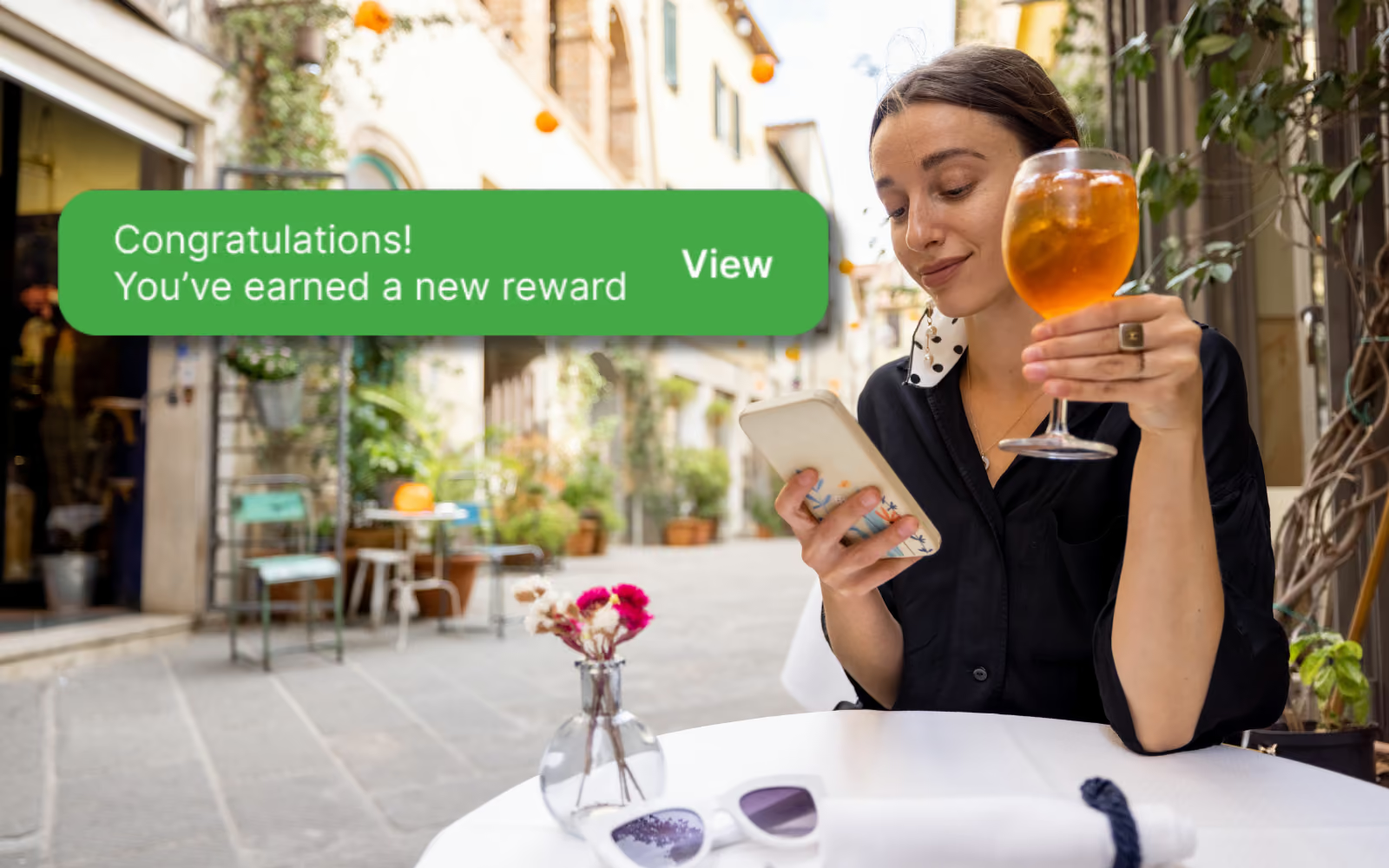
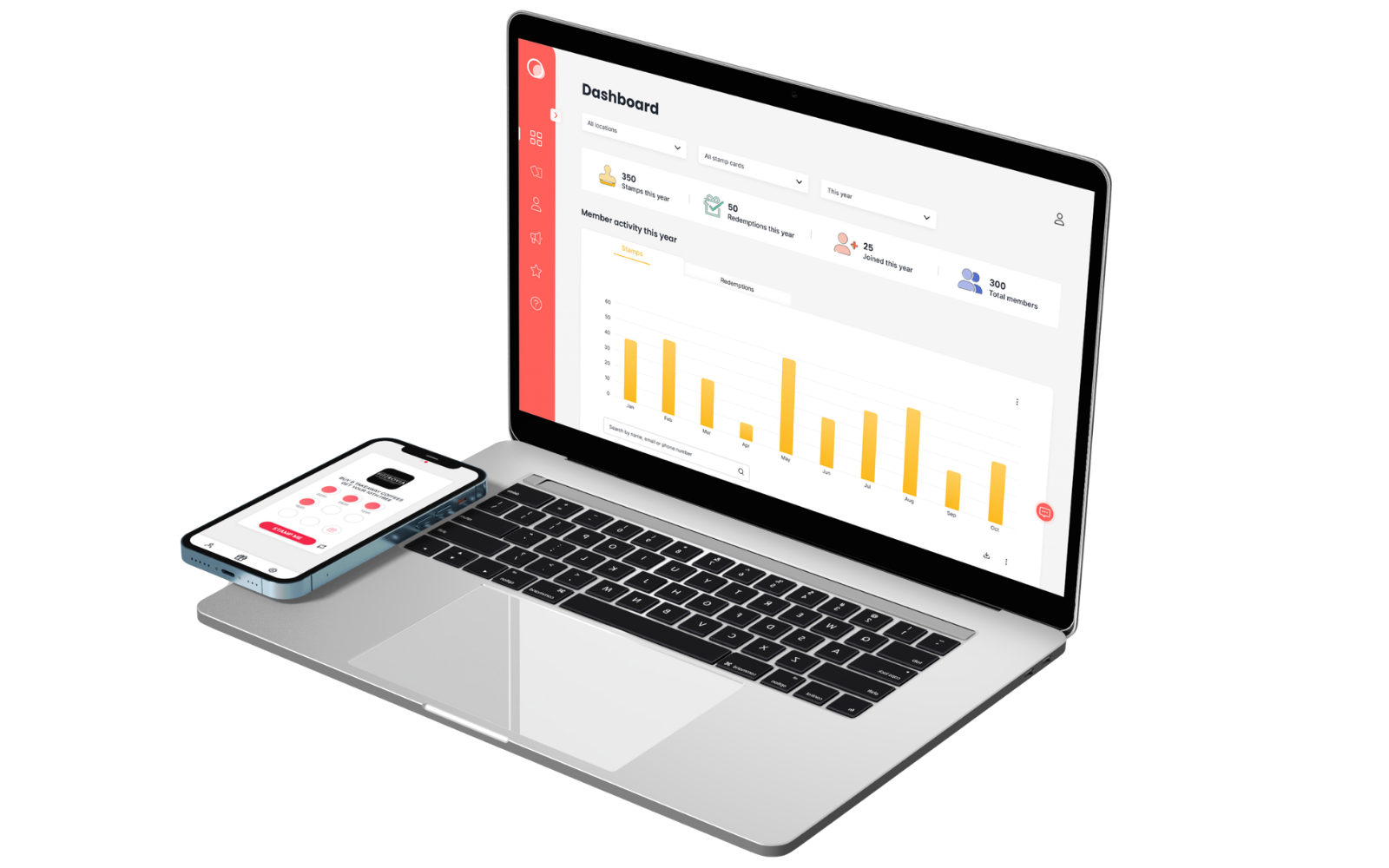
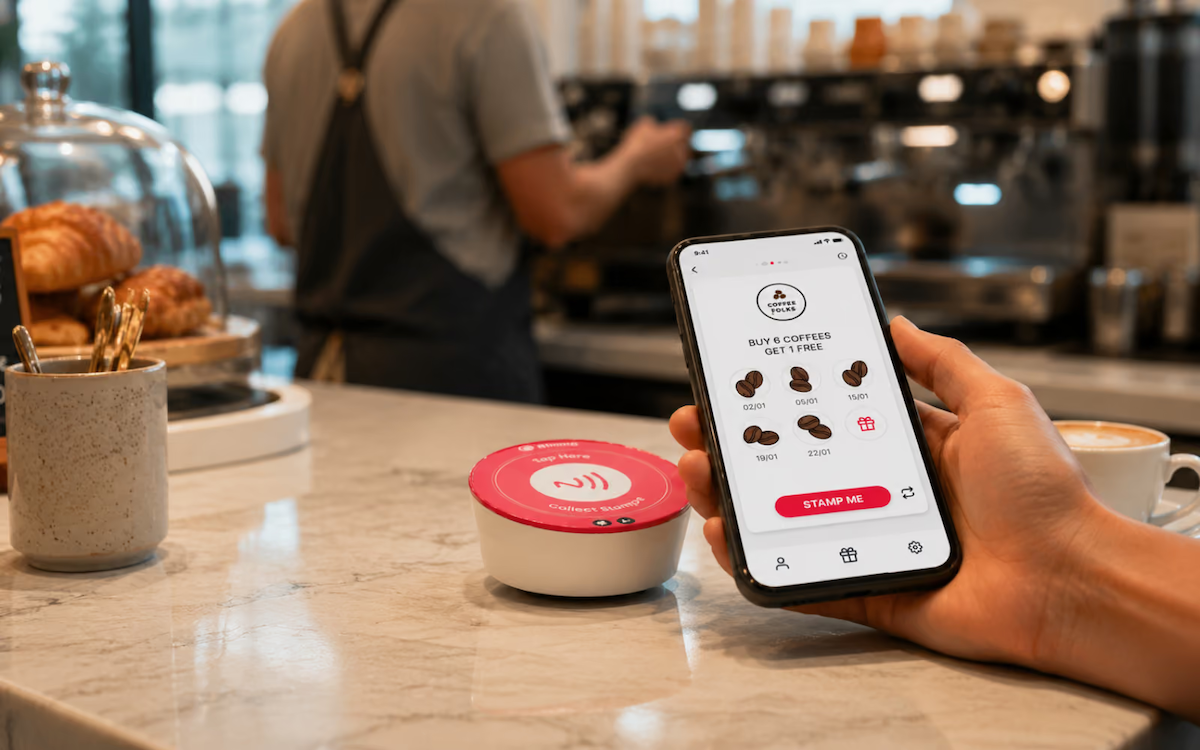
A digital program flips all of that. Your customers always have it with them, you build a real database with every visit, and you can talk to people directly — whether that's a push notification about a new menu, an automated birthday reward, or a message to a regular you haven't seen in six weeks. Redemption is cleaner too, with animated in-app vouchers that eliminate the fraud and guesswork that comes with manual paper stamping. And if you ever open a second location, you're already set up to scale.
From their Merchant Console, Canadian chain Kinjo Sushi, can send push notifications, texts and emails to keep customers informed about new store locations, updated menus, exciting upcoming events and other news.
That's the real difference. Paper is passive. A digital loyalty program for restaurants lets you act.
How Do You Measure Whether a Restaurant Loyalty Program is Successful?
Track repeat visit rate, active members, redemption rate, and revenue per member — not total sign-ups. A program with 400 highly engaged members outperforms one with 2,000 dormant registrations.
Sign-up numbers are vanity metrics. Here's the specific metrics to look at and what they reveal about your restaurant loyalty program’s effectiveness.
- Repeat visit rate: Are members returning more often than non-members?
- Active members (last 90 days): What share of your database is genuinely engaged?
- Revenue: members vs. non-members: Are loyalty members your most valuable segment?
- Average visits per member: Is the program changing dining frequency?
- Lapsed customer recovery rate: Are your win-back messages actually working?
A healthy program shows a gap between member and non-member visit frequency — members should be coming back more often. If redemption rates are low, the reward threshold may be too high or the reward itself not motivating enough. If active membership is dropping, it's usually a sign that sign-up happened but the program never delivered enough value to stick.
Measure engagement, not registrations.

What Mistakes Make Restaurant Loyalty Programs Fail?
The most common failures are discounting instead of rewarding, setting thresholds too high, not training staff to mention the program, and treating it as a set-and-forget tool rather than an active marketing channel.
- Replacing rewards with discounts. A 10% off every visit isn't a loyalty program — it's a permanent price reduction. It attracts price-sensitive customers and erodes margins without building any genuine emotional connection. Reserve discounts for sign-up incentives or milestone rewards, not as the ongoing mechanic.
- Setting the threshold too far out. If it takes 20 visits to earn a reward at a restaurant customers visit monthly, most will stop tracking long before. Keep the main reward within 60–90 days of normal dining behavior.
- Not involving your front-of-house team. The highest conversion moment is at the point of payment — a quick, simple, and enthusiastic mention from someone the customer trusts converts far better than any countertop sign. If staff don't promote it, the program quietly starves.
- Ignoring the data once it's collected. The biggest advantage of going digital is the customer database you build. If you're not using it for birthday rewards, quiet day promotions, or lapsed member re-engagement, you've invested in a tool you're leaving mostly unused.
- Treating it as finished once it launches. Loyalty programs that improve over time — testing new rewards, running bonus stamp campaigns, adjusting thresholds based on redemption data — consistently outperform those that run unchanged from launch.
Start Building Long-Term Customer Loyalty
A successful restaurant loyalty program is built on one principle: make customers feel genuinely valued, and give them a concrete reason to come back. Keep the mechanics simple, involve your team, and use the data you collect to keep improving.
Stamp Me helps independent restaurants create digital loyalty programs with rewards, customer insights, birthday clubs, and automated marketing — designed to increase repeat visits without adding workload for your team.

Enter a few details based on typical customer behaviour to estimate the revenue uplift and ROI a loyalty program could deliver.




.webp)