
How Chick-fil-A Built a 50M-Member Loyalty Program (And What Small Businesses Can Learn From It)
TL;DR: Chick-fil-A's 50M-member loyalty program isn't successful because of its app or its data team — it's three psychological triggers: a fast first reward, visible progress, and well-timed nudges instead of blanket promos. All three are able to work at one location with zero dev budget.
Chick-fil-A pulls in roughly $9.4 million in average annual revenue per restaurant. McDonald's averages closer to $3.8 million. Chick-fil-A does it with fewer locations, a shorter operating week (closed every Sunday), and a menu built almost entirely around one protein.
Loyalty isn't the whole reason for that gap. But it's a real piece of it. Chick-fil-A One has crossed 50 million members, consistently ranks among the most loyal customer bases in fast food, and is widely regarded as one of the most successful restaurant loyalty program models in the country.
"Look how big Chick-fil-A is" isn't useful if you run one location and don't have a development team. What actually matters is the psychology behind the numbers — and every lesson below is built to work without an app, a data science team, or a marketing budget with a comma in it.
How Does Chick-fil-A One Actually Work?
If you've never dug into Chick-fil-A One rewards, the mechanics are simpler than the results suggest.
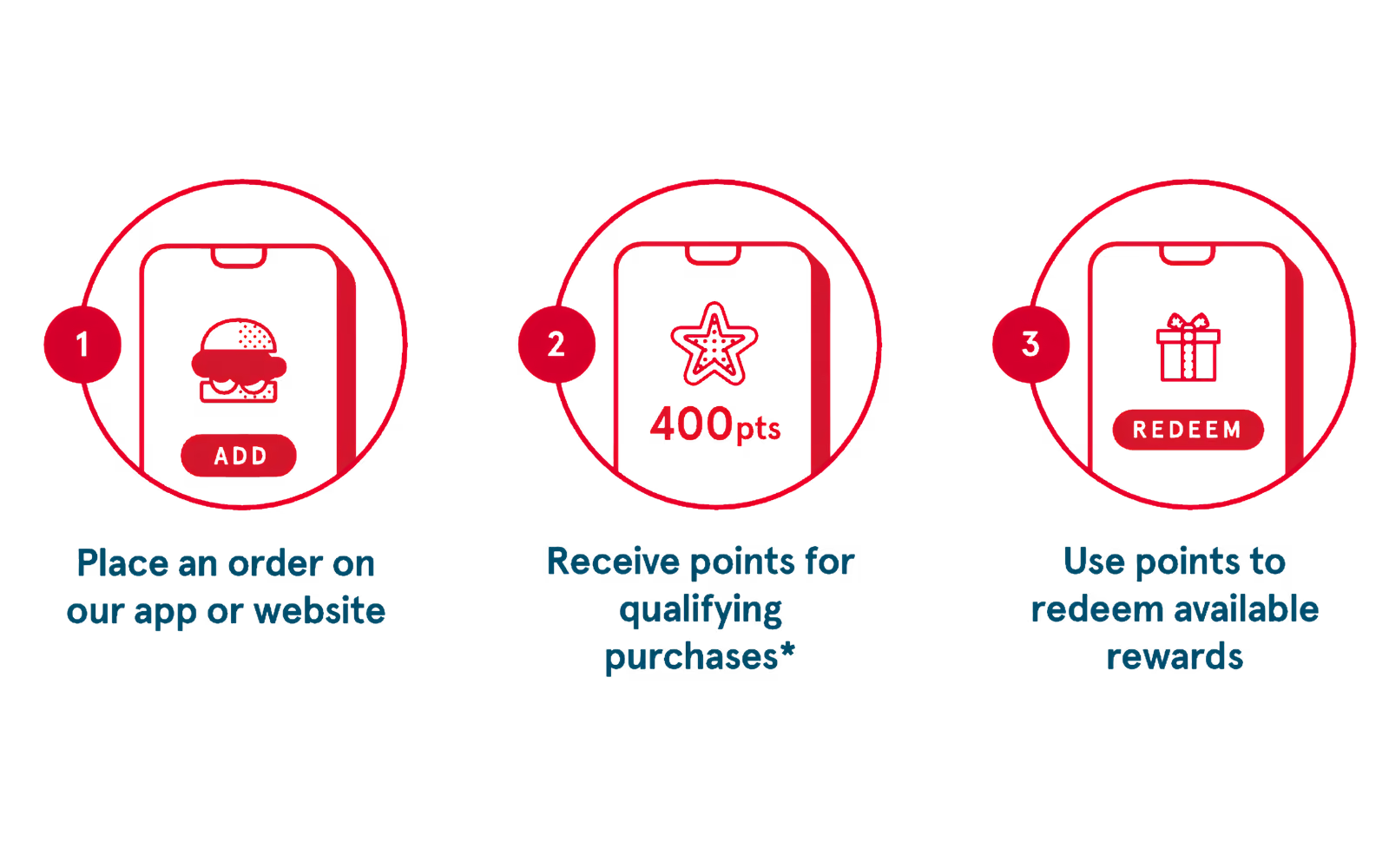
Chick-fil-A One launched in 2016. It's free to join, works through the app or website, and enrolls anyone who signs up automatically as a Member.
The program runs on four tiers:
- Member – 10 points per $1 spent
- Silver – 1,000 points to unlock, 11 points per $1
- Red – 4,000 points to unlock, 12 points per $1
- Signature – 10,000 points to unlock, 13 points per $1
The first reward unlocks at just 200 points — meaning a customer who spends $20 has already earned something free. That's the number worth paying attention to, because it drops the cost of the first reward low enough that a second visit is often all it takes.
Here's the thesis of this whole article: the mechanics that make this program work aren't the technology. They're psychology. And psychology scales down to one location just fine.
Lesson 1: Make the First Reward Easy to Reach
A 200-point entry threshold means most customers earn their first reward on their second visit. That's not generosity — it's the goal-gradient effect at work: people speed up their effort as they perceive themselves getting closer to a reward. The closer the finish line looks, the harder people push toward it.
The small business translation: Set your first-reward threshold so it's reachable in 1–2 visits, based on your actual average repeat-visit window (usually 2–4 weeks for most local businesses) — not a round number that just looks generous on a flyer.
Lesson 2: Give Customers Something to Work Toward (Without Copying the Tier System)
Chick-fil-A's Silver/Red/Signature ladder works because it borrows from airline-status psychology: status signaling, loss aversion once you're inside a tier, and social proof from visible in-app badges. It only functions at Chick-fil-A's scale — enough customers per tier for "Silver" to feel earned, and enough data to calibrate fair thresholds.
Here's the honest caution: for a single location or small chain, color-coded tiers are not as applicable. There aren't enough customers to make a tier feel meaningful, there's no data to set fair thresholds, and the management overhead rarely pays for itself. Copying the system instead of the principle is the most common mistake small businesses make when they try to imitate big loyalty programs.
What to do instead:
- A single "regulars" milestone rather than a ladder — a free upgrade, a free side, free dessert, early access to a new item, or the first pick of reservations
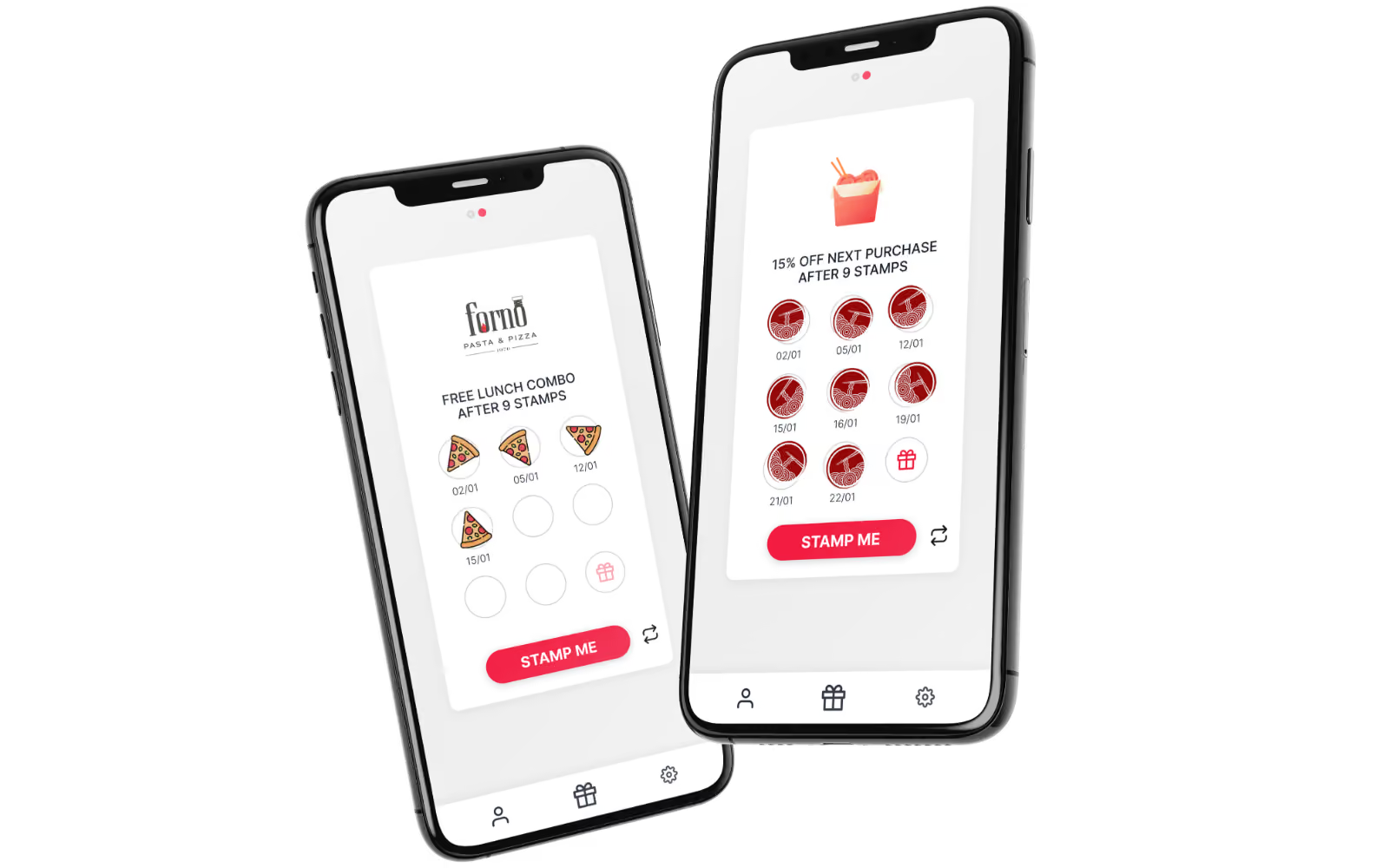
- Progress visibility itself as the reward mechanic — a stamp card that shows "3 away" does real psychological work
- If you want any status split at all, keep it binary: member vs. VIP after one clear trigger, not three tiers
Lesson 3: Stay Top of Mind With Smart, Trigger-Based Nudges
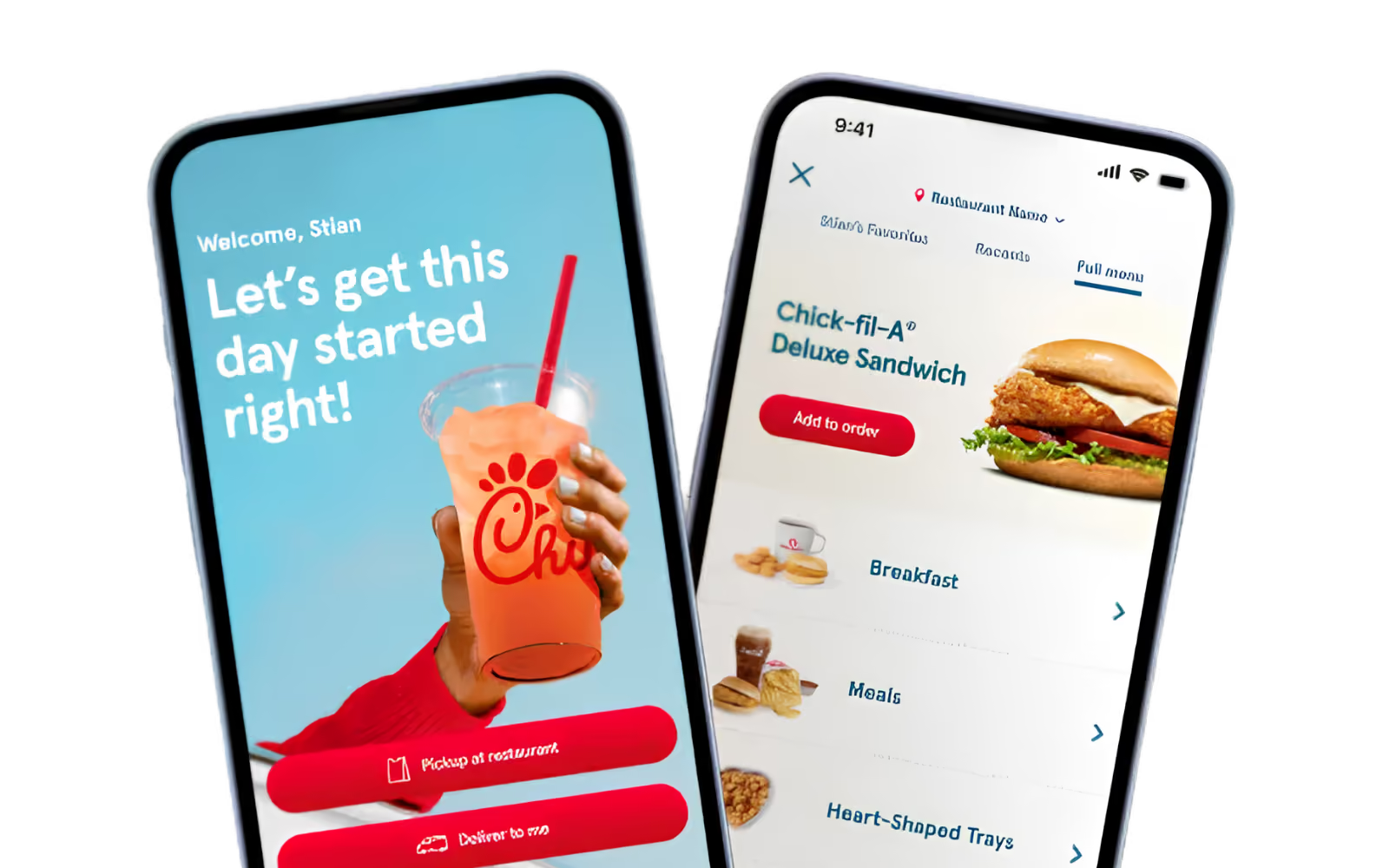
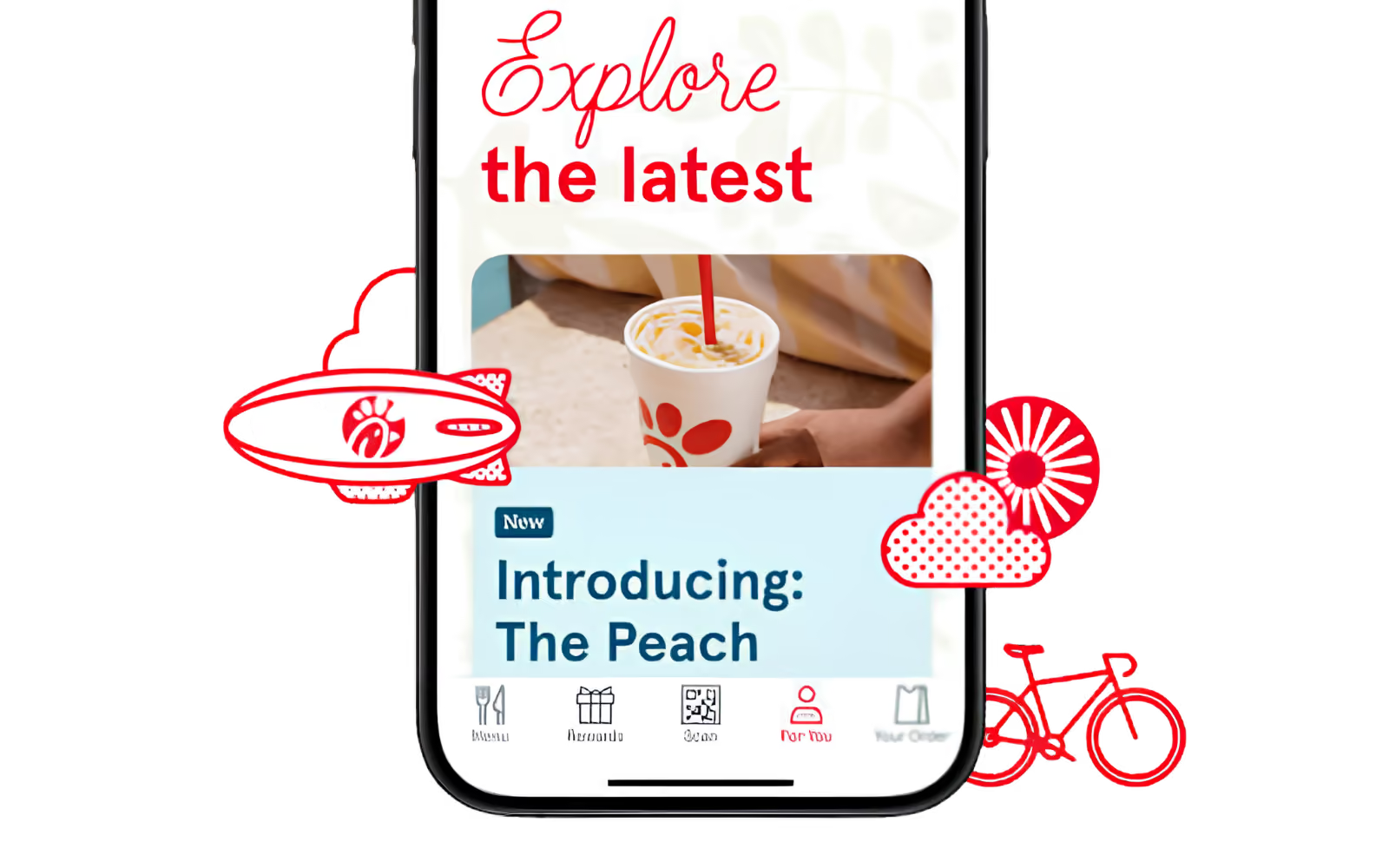
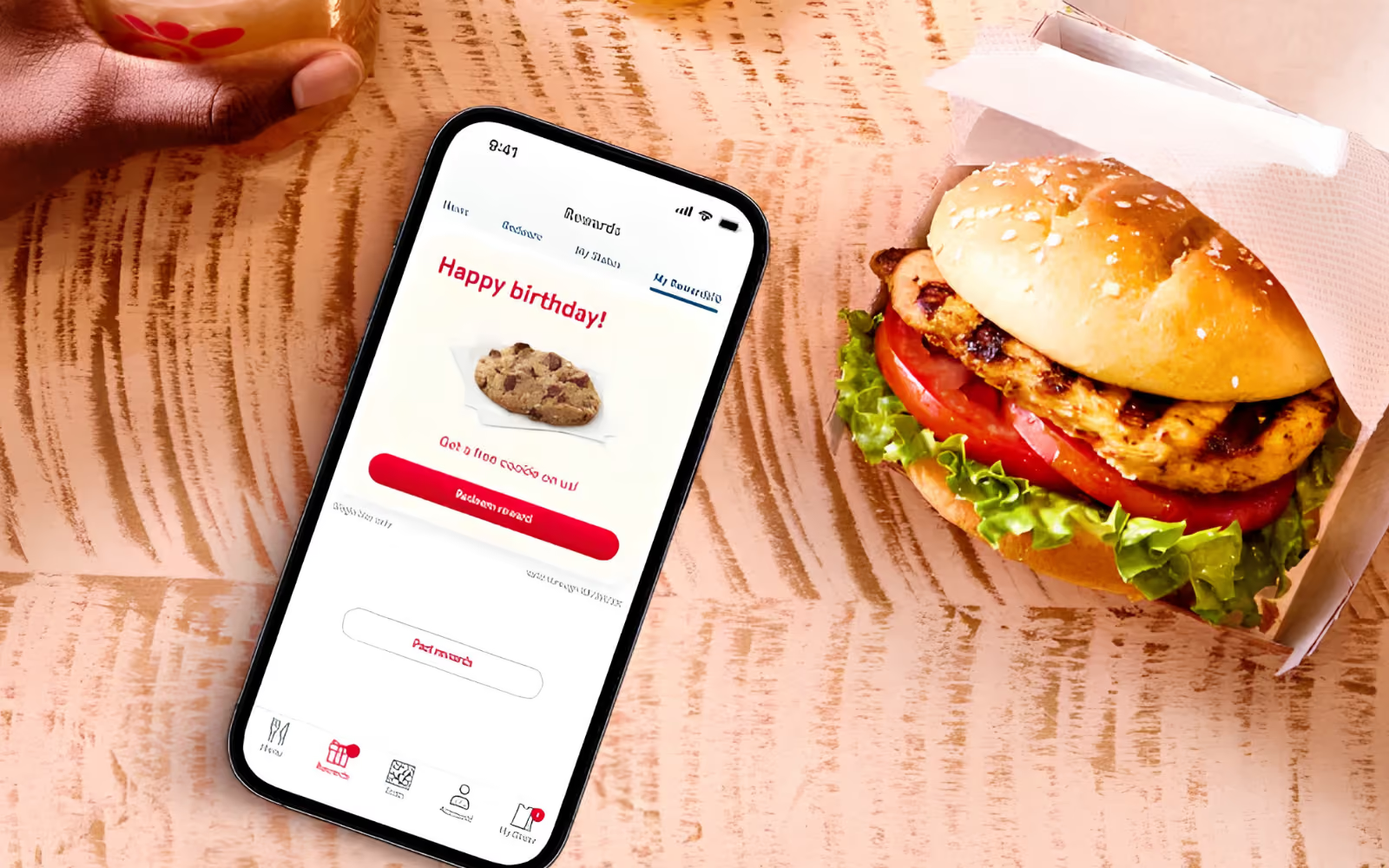
Chick-fil-A One pings members through wallet-style passes when their balance updates, when a birthday reward is ready, or when points are about to expire — all without opening the app.
Most business text campaigns get ignored because they're generic ("Come back! 10% off!"). Chick-fil-A's messages work because they're triggered by something specific: proximity to a reward, a birthday, an expiry date. The timing is the lesson — not the wallet-pass technology.
The small business translation: you don't need a native app to do this. A digital loyalty tool that sends automated, trigger-based nudges gets you most of the way there — "you're 1 stamp away," or a message that fires automatically after someone hasn't visited in a set number of days. The point isn't the channel. It's sending the right message at the right moment instead of a blast every Friday.
Lesson 4: Personalization Beats Bigger Discounts
A 10%-off code and a birthday treat can cost the same dollar amount and still land nothing alike. One's a transaction. The other's recognition — and recognition is what people actually remember.
Discounts get compared to every other discount out there, so they're always a race to the bottom. Recognition isn't comparable to anything — it's specific to you. You can find cheaper coffee down the street. You can't find somewhere else that already knows it's your birthday.
That's also why personalized rewards don't need to be big to work. A free pastry on your birthday beats 20% off some random Tuesday, even when the discount is worth more on paper. Being remembered isn't something you can price.
Small business translation: birthday campaigns and "favorite order" prompts cost almost nothing to run — and they outperform generic discounts on recall and redemption, because they're not competing on price at all.
Lesson 5: Remove Every Bit of Friction
This is the most underrated part of Chick-fil-A One, and the one competitors talk about least. If a customer forgets to scan at checkout, they can still claim points by scanning their receipt later — one claim per day, within 30 days.
That grace window isn't a loophole. It's a deliberate removal of the punishment for forgetting. Most loyalty programs quietly penalize a distracted customer by making them forfeit points. Chick-fil-A's version assumes good faith, reduces friction, and still caps the exposure to abuse at one claim per day.
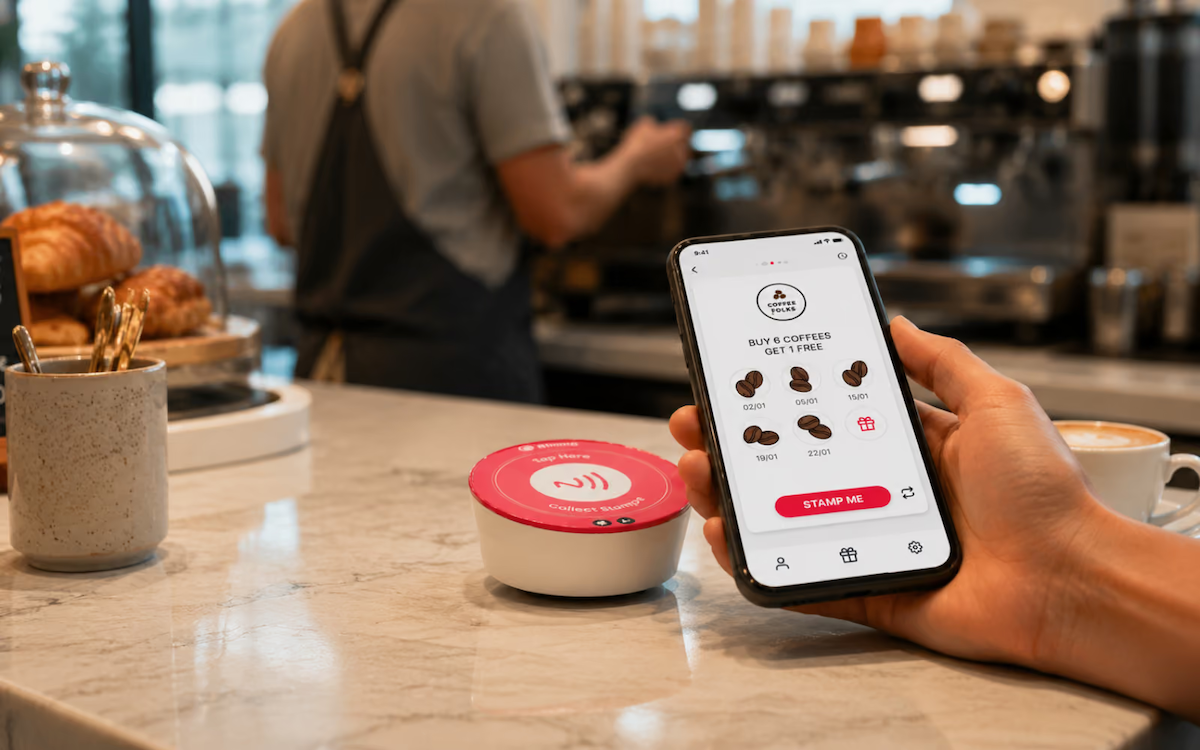
The small business translation: a digital stamp card that lives on a customer's phone — like the ones Stamp Me sets up — solves this automatically. There's no physical card to lose; the customer just taps to check in, and the stamp gets logged either way. Add a grace-period rule (a missed visit doesn't reset their progress) and you've replicated Chick-fil-A's forgiving redemption policy without any custom development.
Lesson 6: Loyalty Isn't About Discounts, It's About Habits
Every lesson above ties back to the same finding: a short, transparent, visible distance to the next reward drives repeat visits more reliably than the size of the reward itself. A customer who can see they're two visits from something free comes back. A customer staring at a vague "10% off eventually" does not. Of all the customer retention strategies out there, this is the one most businesses overlook — it costs nothing and outperforms most discount campaigns
What Small Businesses Can't (and Shouldn't) Copy
Scale, data science teams, and decades of brand equity aren't replicable at the local level — and trying to copy the entire system, tiers included, is the failure mode covered in Lesson 2. The goal isn't to build a miniature Chick-fil-A One. It's to borrow the psychology that doesn't require the scale.
What Small Businesses Can Copy — Side by Side
For a quick reference, here's how each Chick-fil-A mechanic translates into small business loyalty program ideas you can put in place without a dev team.
A Simple Framework for Applying This Month: The Reachable Reward Rule
You don't need to overhaul your whole customer experience to put these lessons to work. Start with three things:
- Make the first reward achievable within 1–2 visits.
Choose a reward customers can realistically earn quickly, such as Buy 5, Get the 6th Free. Early wins build momentum and encourage customers to come back. - Keep progress visible and automate reminders.
Let customers see exactly how close they are to their next reward, then send automated nudges like "You're just one visit away" or "Your birthday reward is waiting." The right reminder at the right time is far more effective than constant promotions. - Keep it simple and friction-free.
Skip complicated tiers and confusing rules. Make earning and redeeming rewards effortless. The easier the experience, the more likely they'll keep using it.
That's it. No app build, no loyalty department, no seven-figure tech budget — just the same psychological principles Chick-fil-A used to get 50 million people carrying its app around.
Want to Build a Loyalty Program That Actually Drives Repeat Visits?
If you're ready to apply the same principles that make Chick-fil-A One so effective, you just need a program that's easy to join, rewarding to use, and gives customers a real reason to come back. That's exactly what Stamp Me helps small businesses create.

Enter a few details based on typical customer behaviour to estimate the revenue uplift and ROI a loyalty program could deliver.





.webp)