
Why Restaurant Customers Tune Out Generic Loyalty Messages (And What Actually Gets Opened)
TL;DR: Generic restaurant loyalty program communication blasts don't just get ignored — they drive unsubscribes. Segmenting by behavior (visit timing, order history, frequency, spend) instead of demographics can lift email opens 14–30% and clicks up to 50–100%. Restaurants don't need a data team to do this; three data points from an existing POS or loyalty system are enough to start.
Bottom line up front: The problem with most restaurant loyalty messaging isn't the channel — it's the sameness. A lunch regular and a Friday-night diner getting identical steak promos isn't a minor miss; it's the difference between a redeemed offer and a one-way trip to "unsubscribe."
The cost of "Dear Valued Customer"
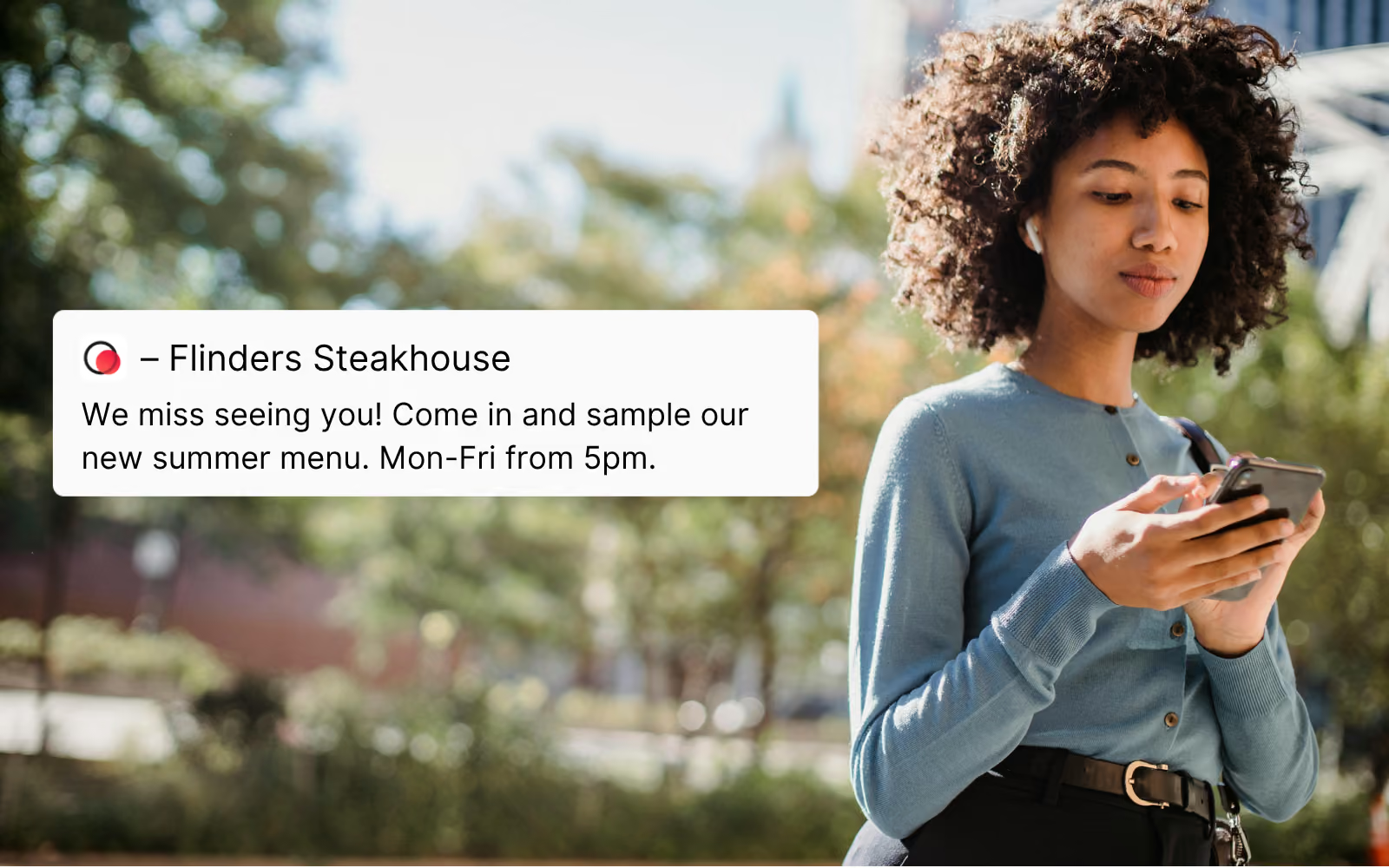
Picture two regulars at the same restaurant. One comes in most weekdays for a quick lunch. The other shows up Friday nights for a bigger meal out. Both get the same push notification: 20% off a steak dinner. The lunch regular isn't dining out Friday night. The Friday-night regular is vegetarian and has never ordered red meat there. Both delete the message.
That's not just one ignored promotion. It's evidence. Every irrelevant message a guest receives makes the next one easier to swipe away — and eventually easier to unsubscribe from entirely. Recent research from Attentive found that 36–43% of loyalty program unsubscribes come down to messages that felt irrelevant or too frequent, not dissatisfaction with the brand itself. People aren't opting out because they stopped liking the restaurant. They're opting out because the restaurant stopped talking to them specifically.
The channel isn't the problem. Email, SMS, and app push all still work when the restaurant loyalty program communication earns its place in someone's inbox. The sameness is the problem.
Why do customers ignore restaurant loyalty emails and texts?
Customers tune out restaurant loyalty messages because most of them are written for an average guest who doesn't exist. A message built for "everyone" ends up feeling built for no one — and guests notice fast. Surveys on marketing relevance consistently show that around 71% of consumers say irrelevant messages actively frustrate them, and roughly 1 in 4 say a generic message makes them less likely to buy from that brand again.
This is where segmented campaigns pull ahead of batch-and-blast sends. Across restaurant marketing data, segmented offers consistently out-redeem one-size-fits-all promotions, because relevance isn't a nice-to-have layered on top of a good offer — it's the entire difference between an offer that gets used and one that gets deleted.
There's a myth worth killing here too: more sends does not equal more engagement. Since 43% of loyalty unsubscribes are frequency-driven, cranking up send volume without improving relevance doesn't just fail to help — it actively compounds the damage. A guest who gets three irrelevant messages a week unsubscribes faster than one who gets one irrelevant message a month.
What is behavior-based segmentation for restaurants?
Behavior-based segmentation means grouping guests by what they actually do — when they visit, what they order, how often they come back, how much they spend — instead of who they are on paper. It's the difference between demographic segmentation, which sorts guests by age or gender and "tells you almost nothing" about what they want to eat this week, and behavioral segmentation, which tells you almost everything.
Most restaurants already capture four behavioral data points without realizing they're sitting on a segmentation model:
- Visit timing. A lunch regular and a Friday-night diner aren't the same guest wearing different hats — they need different offers, different urgency, and a different tone. A midday "top up your lunch" nudge lands differently than a weekend "bring a friend" invite.
- Order history. The guest who has never once ordered meat doesn't need to see the steak promo — they need to hear about the new plant-based dish first, before anyone else does.
- Frequency and recency (RFM-style). A brand-new guest, a developing regular, and a regular who's starting to drift away are three different relationships, and none of them should get the same generic "here's 20% off."
- Spend pattern. A guest who visits rarely but spends a lot isn't looking for a discount that quietly erodes the restaurant's margin — they're a candidate for an experience invite, not a coupon.
The part most "how to promote your loyalty program" content skips is the connective tissue: it's not enough to know these four categories exist. What matters is which message logic follows from which segment — timing signals urgency and tone, order history signals what to offer, recency signals how hard to push, and spend signals what kind of ask to make.
Does personalizing restaurant loyalty program communication actually increase visits?
Yes — and the data on this is consistent across channels.
The bigger strategic point sits underneath these numbers: repeat customers already drive an estimated 65–70% of restaurant revenue. Segmentation isn't really an acquisition tool. It's a retention tool aimed at protecting the revenue base a restaurant already has, rather than chasing new guests with the same blunt instrument.
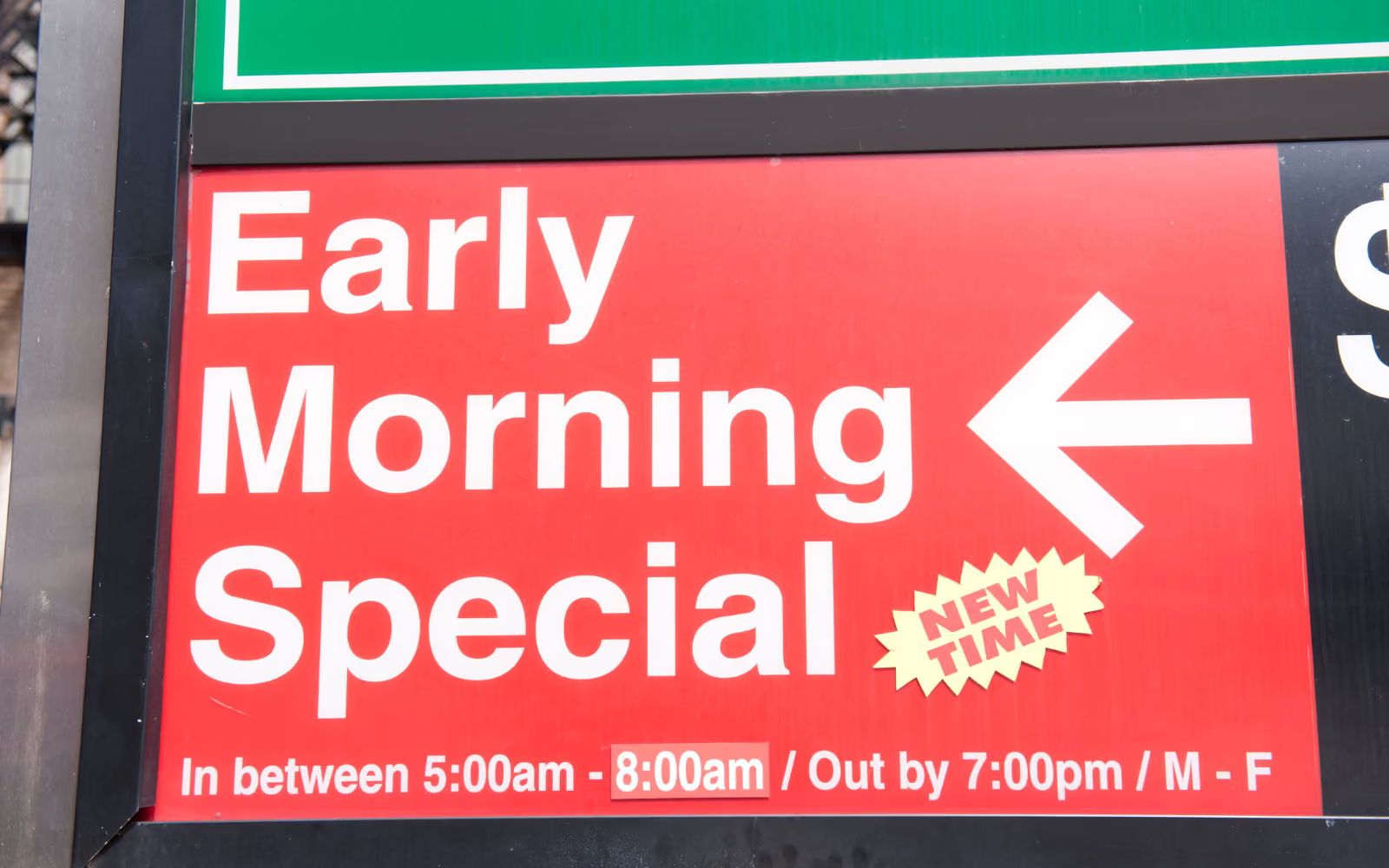
A worked example: Consider a fictional restaurant — call it "The Local" — running a standard $5-off promotion. Sent as one blast to the entire list, it competes with every other generic offer in a guest's inbox and redemption stays flat. Split the same offer across two segments instead: lunch regulars get it framed as a Tuesday–Thursday workday lunch top-up, timed to when they're already deciding where to eat. Weekend diners get a "bring a friend" version instead, timed to Friday planning. Same discount, same cost to the restaurant — but each version now matches the moment the guest is actually in, which is where redemption lift comes from. This is illustrative, not a documented case study, but it captures the mechanism behind the segmented-vs-blast numbers above.
How do restaurants segment customers without a data team?
You don't need a data science team or an AI platform to start segmenting — you need a minimal viable model built from data you're likely already collecting through your POS or loyalty program. Three data points beat zero, and four beat perfection you never get around to building.
A workable starting model uses:
- Recency — how long since the guest's last visit
- Frequency — how often they visit over a given period
- Day-part or day-of-week — when they tend to show up
- One preference signal — a dietary flag or a favorite category pulled from order history
That's enough to route guests into 4–5 usable segments a solo operator or small marketing team can actually maintain, without needing to build out the full RFM-plus-AI stack some platforms sell as a prerequisite.
One practical guardrail worth adopting from the start: cap messages at no more than three per segment per month. Segmentation is meant to make messaging more productive, not just multiply the number of messages guests receive — cadence discipline is what keeps relevance from turning into noise.
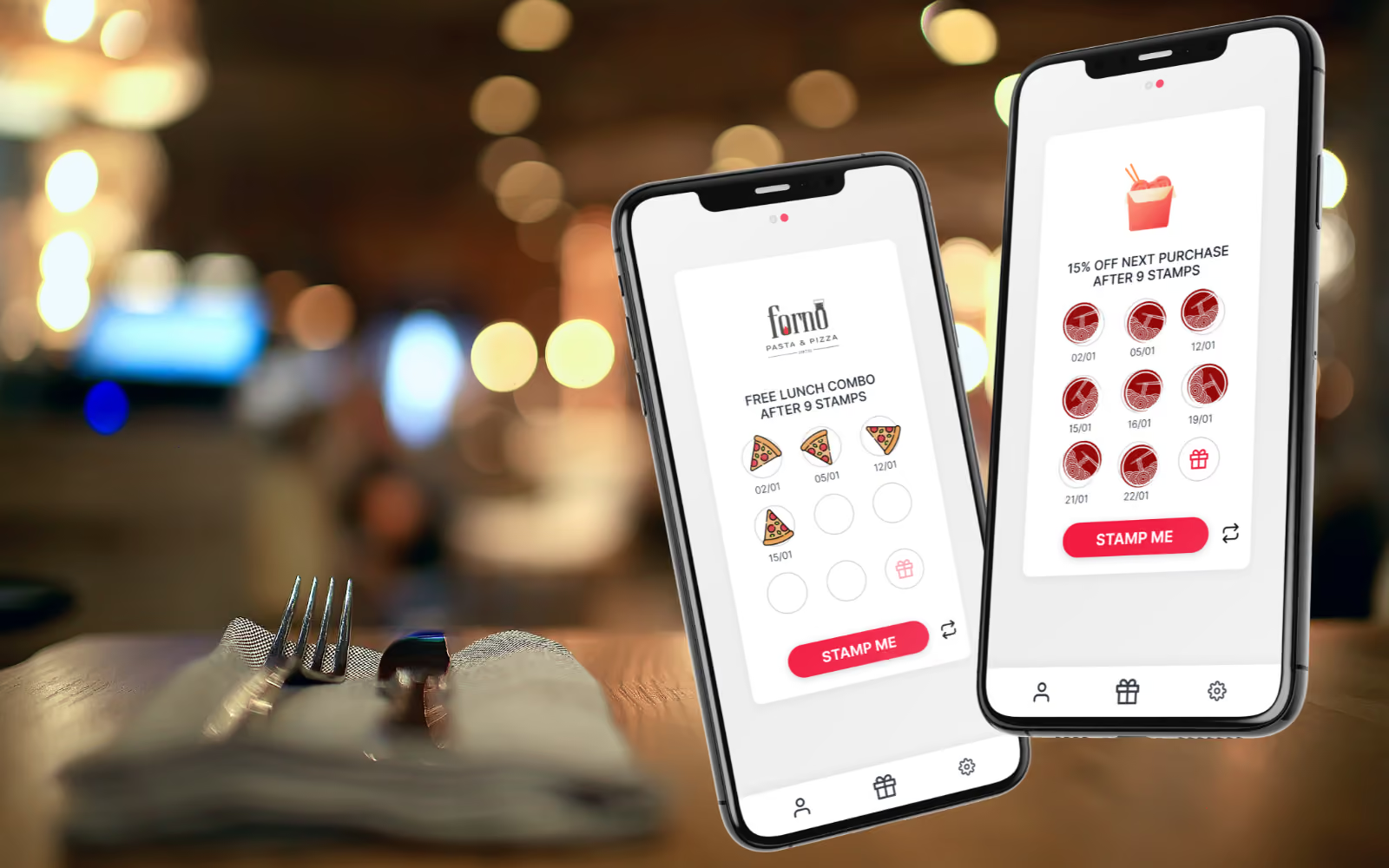
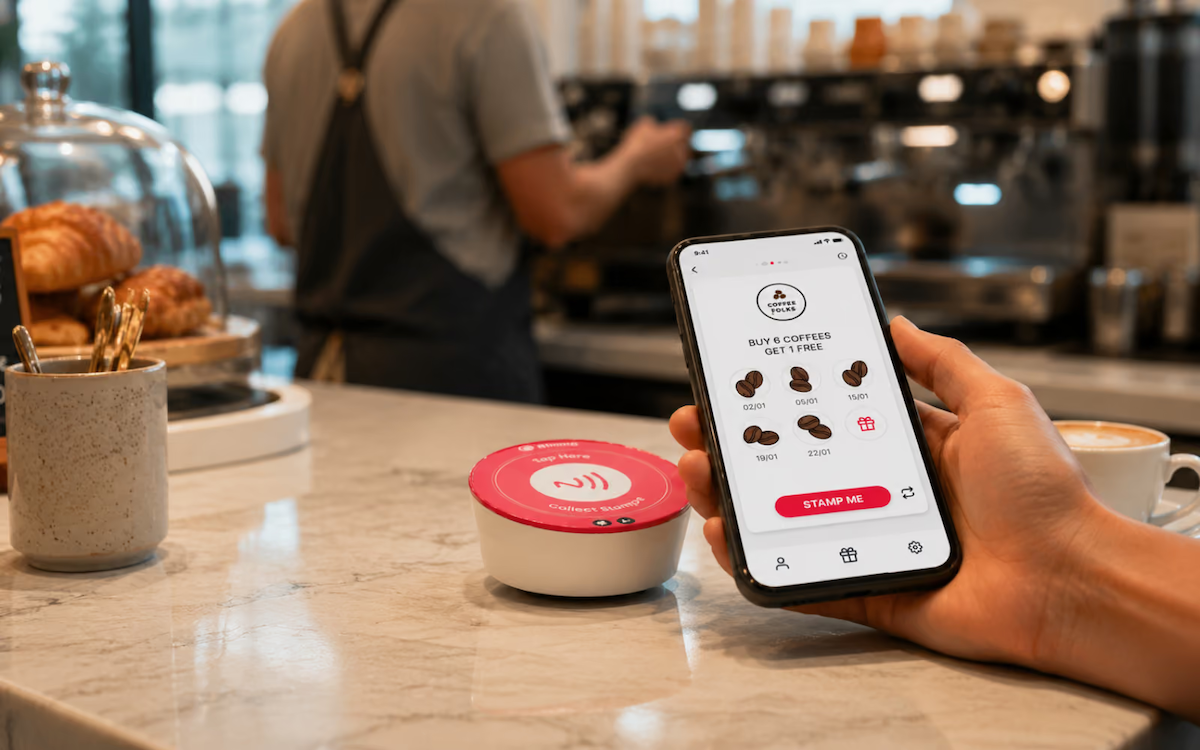
This is also where the data restaurants already gather through a loyalty program does double duty. Stamp records and visit data already capture recency and frequency by design, and reward redemptions or menu tie-ins offer a natural read on preference. Stamp Me is a digital loyalty platform for cafes, restaurants and multi-site hospitality networks — and the visit and reward data it collects by design is exactly the input model described above (recency, frequency, day-part, item/reward preference). The segmentation model above isn't a new system to bolt on — for a restaurant already running a program through something like Stamp Me, it's largely a lens on data that's already being collected. The inputs exist; the work is in routing them into messages that reflect what each segment actually needs to hear.
How often should a restaurant send loyalty offers?
There's no single right cadence — it depends on the segment, not a blanket "send weekly" rule. Dormant or lapsing guests can generally handle a higher-value nudge sent less often, since the goal is to re-earn attention, not wear it down. Regulars, by contrast, respond better to lighter, more frequent messages that stay relevant to their existing habits rather than trying to escalate the offer each time.
This ties directly back to the frequency-driven unsubscribe data covered earlier: since 43% of loyalty unsubscribes trace back to send frequency rather than message quality, cadence has to be treated as part of the relevance equation, not a separate lever to pull for more reach.
Common mistakes when segmenting
- Over-segmenting before there's volume to act on it. A segment of 12 guests isn't worth a separate message thread to maintain — combine it with a related segment until it earns its own lane.
- Segmenting once and never re-running it. A "regular" who hasn't visited in 60 days has quietly become a different segment; a model that isn't refreshed stops reflecting reality within a month or two.
- Personalizing the subject line but not the offer. Dropping a guest's first name into the subject line isn't segmentation — it's decoration. The gap between name-only personalization and actual behavioral relevance is exactly the gap this article has been describing.
Same guest, different message, different outcome
Same guest, different message, different outcome
Go back to that lunch regular and that Friday-night diner. Sent the same steak promo, they both delete it. Sent messages built around when they actually visit, what they actually order, and how their relationship with the restaurant is trending, the outcome changes — not because the offer got bigger, but because it finally matched the guest reading it.
If you're already running a loyalty program, the data for this segmentation is very likely already sitting inside it.
If you're already running a loyalty program, the data for this segmentation is very likely already sitting inside it. Stamp Me's segmentation and communication tools are built to turn that existing visit and reward data into exactly this kind of behavior-based messaging, without asking you to start from scratch. Get started with Stamp Me.

Enter a few details based on typical customer behaviour to estimate the revenue uplift and ROI a loyalty program could deliver.


.webp)