
Why Customer Retention Matters More Than Ever in 2026: Proven Strategies for Growth
.avif)
TL;DR: In tough economic times, customer retention beats customer acquisition every time. Existing customers spend more, cost less to convert, and refer others — making them your best bet for sustainable growth. This article explains why retention matters more in 2026 than ever before, and gives you five practical strategies to build genuine loyalty without a big budget.
Key takeaways:
- Retaining customers costs significantly less than acquiring new ones
- A 5% increase in retention can boost profits by up to 95%
- Loyal customers spend more, refer others, and act as organic marketing
- Loyalty programs deliver 4.8x–5.3x ROI on average
- Small, frequent rewards ("minorstones") build habits and keep customers engaged between visits
Why Does Customer Retention Matter in 2026?
In tough economic times, keeping your existing customers is more profitable than chasing new ones — and this article shows you exactly how to do it.
The business climate in 2026 is tough — and most small business owners already know it. Rising operating costs, cautious consumers, and fierce competition are making every dollar harder to earn. But history shows that downturns have a way of revealing what really matters. And right now, what matters most is looking after the customers you already have.
Customer acquisition (the relentless chase for new buyers) has long been treated as the engine of growth. But the math is changing. In 2026, the businesses that will thrive are the ones focused on retention, using smart customer retention strategies to build genuine relationships with existing customers that keep them coming back, spending more, and bringing others with them.
This article breaks down why customer retention has never been more valuable, what the data says, and how small businesses can use proven customer retention strategies to start winning the loyalty game — without big budgets or complex systems.

What Is Customer Retention? (And Why Should You Care?)
Customer retention is simply the ability to keep your customers coming back. It's the opposite of the acquisition treadmill — instead of constantly spending to attract new buyers, you invest in the people who already know and trust your business.
A customer who returns is more than just a repeat sale. They're proof that your product, service, or experience is worth choosing again. And in a market where consumers are more selective than ever, that repeat choice is extraordinarily valuable.
Customers Are Spending Less — And Thinking More
Before we talk about solutions, it's worth understanding the environment. Consumer confidence has shifted significantly. Research shows that 49% of consumers believe the economy is getting worse, and 79% say they've already changed their spending habits as a result.
Impulse purchases are down. Price comparisons are up. Customers are making more deliberate choices about where their money goes and they're gravitating toward businesses they know and trust.
This is actually good news for businesses with strong customer relationships. When wallets tighten, loyalty becomes a competitive advantage. Customers don't just choose the cheapest option — they choose the option that feels safe, familiar, and worth it. Trust gives you the edge, and trust is built through consistent, positive experiences over time.

Why Loyal Customers Drive More Value Than New Ones
Loyal customers are the backbone of sustainable growth. This is where strong customer retention strategies deliver measurable impact.
Studies show that increasing retention by 5% can significantly increase profits (up to 95% in some industries)
Beyond revenue, loyal customers also reduce marketing pressure because they require less persuasion to convert again.
They are not just repeat buyers — they are stability in uncertain markets.
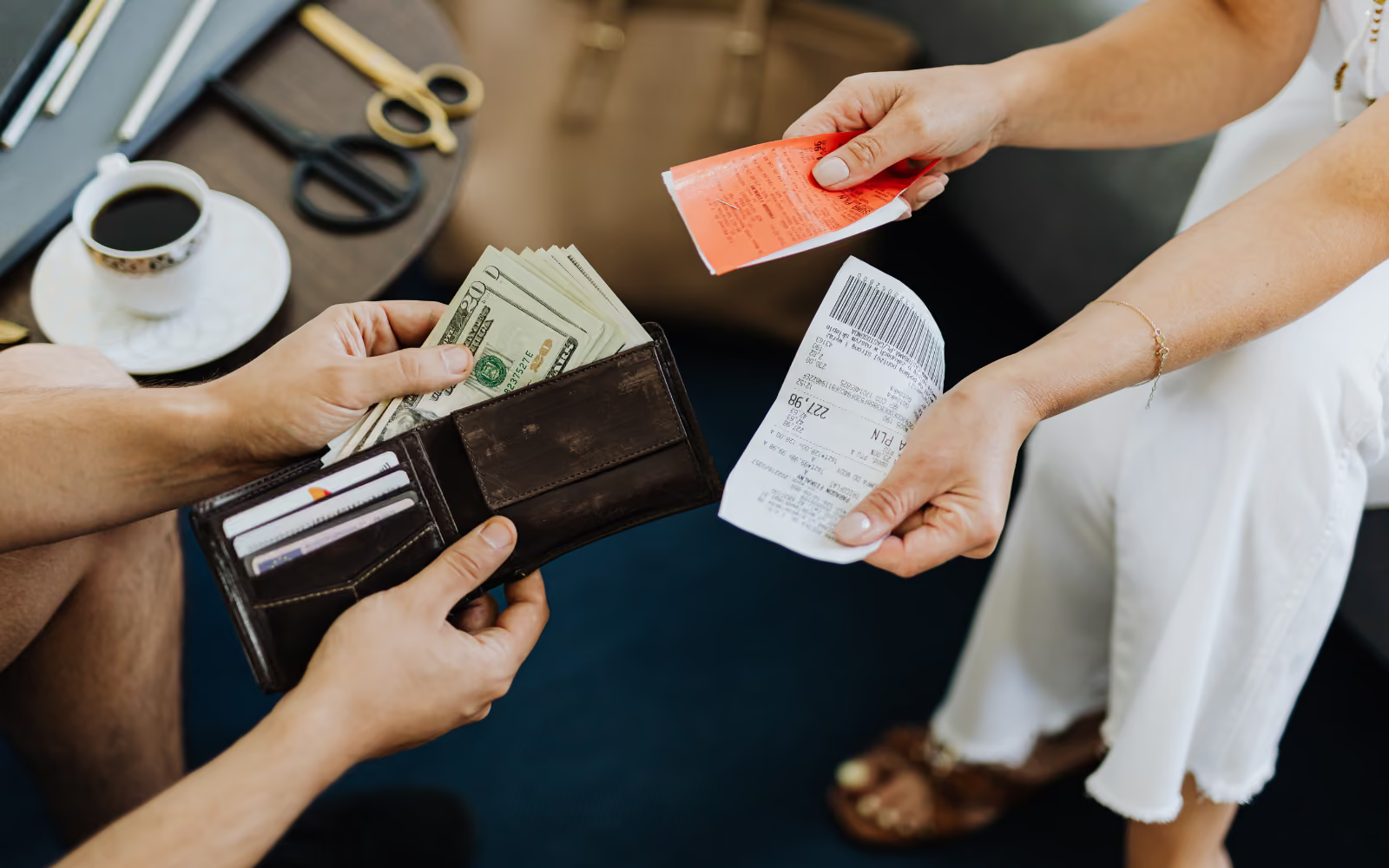
Your Regular Customers Keep Business Stable
For anyone searching how can I improve customer retention for my business, the answer lies in understanding your existing customer base.
Research shows that repeat customers account for up to 65% of revenue for many businesses and tend to spend significantly more per visit than new customers.
This is why strong small business retention strategies are essential — they create predictable revenue even when new customer flow slows down.
Trust Is the New Currency
Loyalty in 2026 is fragile, trust is a critical and primary factor in purchasing decisions, with 81% of consumers requiring trust to buy from a brand.
A single negative experience can undo months of loyalty-building, which is why consistency is central. Customer retention strategy has to go beyond discounts and stamp cards. It has to be built on genuine relationship-building.
Your Best Customers Are Also Your Best Marketers
Loyal customers don't just spend more — they recruit for you. People trust people more than ads.
88% of consumers trust recommendations from friends and family over any other form of marketing and that same word-of-mouth tactic influences up to 50% of all purchase decisions.
This is why strong retention doesn’t just increase revenue — it turns customers into organic growth channels.
In other words, your loyalty investment doesn't just pay off in repeat visits — it compounds through referrals, reviews, and recommendations.
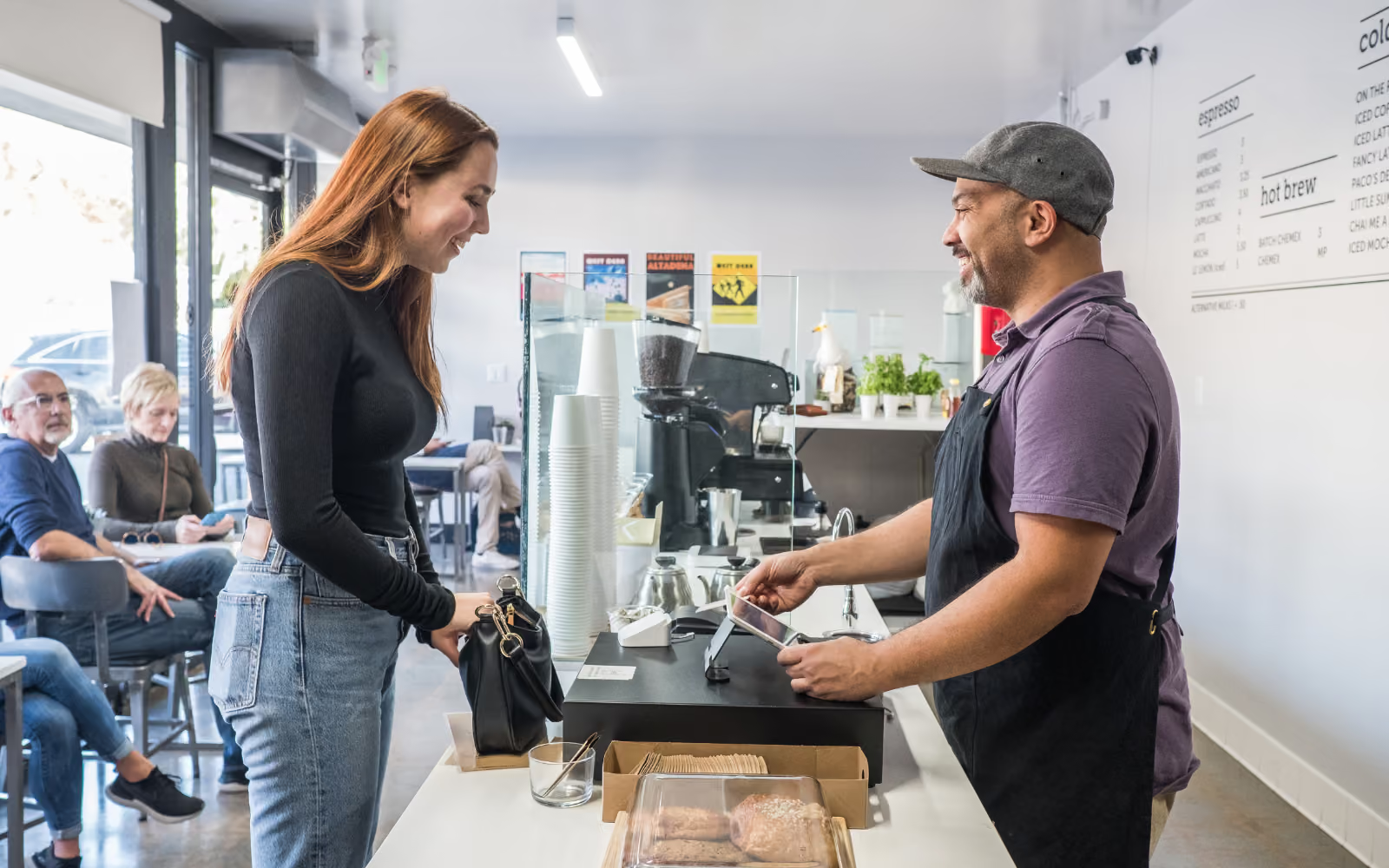
This Is Where Loyalty Programs Really Shine
If retention is the goal, loyalty programs are one of the most effective tools available — and the data backs this up.
With the economy in a state of uncertainty, businesses are directly affected.
From the consumer side, when belts tighten, loyalty programs become more powerful, not less. Within the retail industry, 83% of customers say belonging to a loyalty program influences their decision to buy again from the same brand. In the hospitality sector, loyalty program members generate 30% more revenue per visit than non-members.

It's Not About Transactions — It's About Relationships
Here's where many loyalty strategies go wrong: they're built around big milestones. Spend $200, get a reward. Visit 10 times, earn a coffee. These are reasonable structures, but they miss something important — the journey between milestones matters.
Emerging loyalty thinking in 2026 focuses on what might be called "minor-stones": small, meaningful moments along the customer journey that deserve recognition. These include:
- Signing up for your loyalty program
- The first visit after joining
- A birthday or anniversary
- A third or fifth repeat visit (not just the tenth)
- Sharing a referral or leaving a review
Why does this matter? Because engagement between rewards is where loyalty habits are formed. If customers have to wait too long to feel recognized, they disengage. But if small actions are acknowledged and rewarded — even modestly — they stay connected to your brand and build a routine around visiting.
This shift from transaction-focused to relationship-focused loyalty is one of the defining trends in customer retention strategy for 2026.

How Small Businesses Can Improve Customer Retention with a Loyalty Program in 2026
1. Keep it Simple
If customers have to think about how your loyalty program works, you've already lost them.
The best loyalty programs are incredibly easy to understand.
Customers should instantly know:
- How to join
- How they earn rewards
- What they're working towards
- How to redeem those rewards
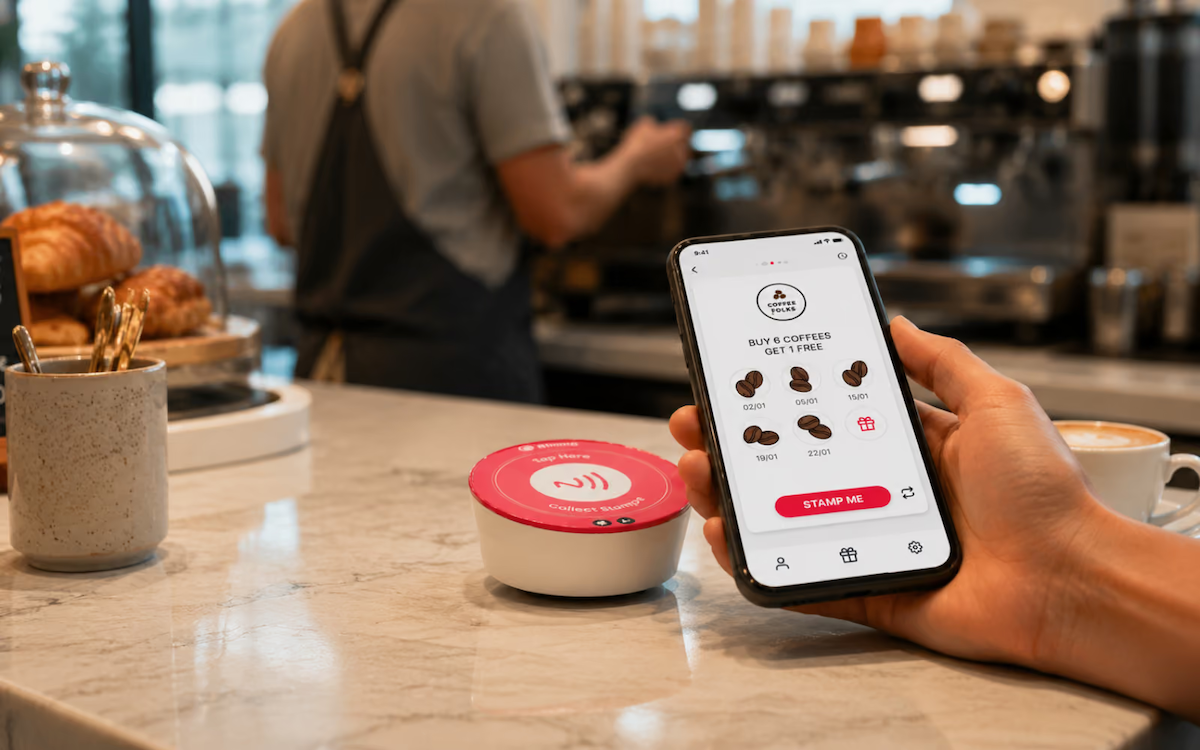
A simple "Buy 9 coffees, get the 10th free" is often far more effective than complicated points systems with dozens of redemption options.
Likewise, the joining process should be frictionless. Customers shouldn't need lengthy forms, passwords or multiple steps before they can start collecting rewards.
The easier your loyalty program is to use, the more customers will actually use it.
2. Make It Appealing
A loyalty program isn't just about offering rewards - it needs to feel worth joining from the very first interaction.
Customers should immediately see the value of becoming a member.
One of the most effective ways to do this is by offering a sign-up reward. Whether it's a free coffee, a discount on their first purchase, bonus loyalty stamps or another exclusive welcome offer, an instant reward creates a positive first experience and gives customers a reason to join on the spot.
Beyond the sign-up incentive, your ongoing rewards should be genuinely valuable and relevant to your customers.
Visual progress also plays a huge role.
Seeing a stamp card gradually fill up creates a sense of achievement and encourages customers to return to complete it.
This psychological effect — known as the goal gradient effect — is one reason stamp card loyalty programs continue to perform so well. People are naturally motivated to complete goals once they've started, making every stamp feel like meaningful progress towards a reward.
3. Reward Customers More Often
Don't wait for a big spend threshold to recognize loyalty. Use minor-stones. Acknowledge the first visit. Celebrate birthdays. Surprise a customer on their fifth repeat visit. Small, frequent rewards build habits and keep your business top of mind.
4. Stay Top of Mind Between Visits
Out of sight is out of mind. SMS, email, and push notifications are powerful tools for gentle reminders — a "we miss you" message after two weeks of inactivity, a birthday offer, or a limited-time promotion. Personalized communication outperforms generic marketing significantly: personalization drives 34% more spend from loyalty members.
5. Create a Consistent Experience
Loyalty is built on predictability. Customers come back when they know what to expect and when what they expect is genuinely good. Consistency across every visit, every location, and every interaction is foundational to any customer retention strategy.
6. Use Data to Understand Your Customers
The businesses winning at retention in 2026 are using data to make smarter decisions — not just tracking purchases, but understanding visit frequency, response to offers, and lifetime value. Even basic data, collected through a loyalty platform, can transform how you engage with customers.
Here is an example of loyalty program customer insights in the Stamp Me loyalty platform:
.avif)
The Bottom Line
Customer retention isn't a nice-to-have strategy anymore. It's the clearest path to small business retention and sustainable growth in 2026. The numbers are compelling:
- Retention beats acquisition on cost, conversion probability, and ROI
- Loyal customers spend more, visit more, and refer others
- Loyalty programs deliver measurable results — especially when economic conditions are challenging
- Relationships, not transactions, are what create lasting loyalty
The businesses that will come out ahead aren't necessarily the ones with the lowest prices or the biggest marketing budgets. They're the ones that make their customers feel valued — consistently, simply, and authentically.
Ready to Improve Your Customer Retention?
Stamp Me is built for exactly this. Designed for small and mid-sized businesses without enterprise budgets or complex IT setups.
You've already done the hard work of earning your customers. Stamp Me helps you keep them.
Use our ROI calculator to see how customer retention can deliver long-term returns for your business.

Enter a few details based on typical customer behaviour to estimate the revenue uplift and ROI a loyalty program could deliver.





.webp)