
Slow Season Survival Guide for Small Businesses

Slow seasons are predictable, not emergencies — the businesses that struggle are the ones that plan for them after they hit instead of before. Build a cash reserve during your busy months, cut staff hours before headcount, and put your marketing budget toward re-engaging existing customers rather than chasing new ones — retention converts at 60–70% versus 5–20% for new prospects, and costs a fraction as much. A loyalty program is what makes that retention strategy actually run on autopilot.
TL;DR:
- Slow season doesn't have to mean slow revenue — it's predictable, so plan for it before it hits
- Forecast your exact revenue shortfall and set aside a cash reserve during peak months
- Reduce staff hours before cutting headcount, and use quiet weeks for cross-training
- Skip expensive new-customer acquisition — existing customers convert at 60–70% vs. 5–20% for new prospects, and cost far less to reach
- Use a loyalty program to automate re-engagement, targeting lapsed and near-reward customers at near-zero cost
Every business has one. Whether it's a landscaper watching the phone go quiet in January, a boutique counting down the weeks after the holiday rush, or a cafe that empties out once summer tourists leave, a slow season shows up on the calendar every year — and it always seems to catch owners off guard anyway. Learning how to survive slow season small business challenges isn't about hoping for better luck next year. It's about treating a predictable dip like the predictable event it actually is, and building a plan for it before it arrives.
This guide walks through the three levers that decide whether a slow season is a manageable dip or a genuine threat: cash flow, staffing, and marketing. It also makes the case for the one move most owners overlook — that the cheapest, fastest way to survive a slow season isn't a bigger ad budget. It's the customers you already have.

Why Slow Seasons Catch So Many Businesses Off Guard
Seasonal revenue swings aren't a niche problem — they affect roughly two out of three small firms, and uneven cash flow is one of the most commonly cited financial challenges among small employer businesses in the US. In other words, if your revenue moves up and down with the calendar, you're in the majority, not the exception.
What actually turns a slow season into a crisis usually isn't a shortage of total revenue across the year. It's timing. Rent, payroll, and loan payments don't pause just because customer demand has. The gap between money going out and money coming in is what creates the panic — not the slow season itself.
It helps to know which kind of slow season you're dealing with, because each one calls for a slightly different response:
- Predictable seasonal dips — tied to weather, school holidays, or industry rhythm (a tax preparer in summer, a landscaper in winter). These repeat every year and are the easiest to plan around.
- Economic or demand dips — broader pullbacks in consumer spending, not strictly calendar-driven.
- Post-peak crashes — the sharp drop right after a holiday season or big promotional push, when customers who just spent heavily pull back.
All three share the same starting point: get ahead of your cash position before the quiet months actually arrive.

Step 1: How to Manage Cash Flow During Slow Season
Cash flow problems are consistently named as the leading cause of small business failure, and seasonal swings are one of the biggest contributors to that number. None of the fixes here are complicated — they just require discipline during the months you're least inclined to think about them: your busy ones.
Forecast the actual gap, in dollars. Pull your revenue by month for the past year or two. If you typically bring in $8,000 a month but drop to $4,000 during your two slowest months, you're planning for a real $8,000 shortfall — not a vague sense that "things get quiet."
Set aside a fixed percentage of peak-season revenue automatically. Treat it as money already spent on next quarter's rent, not savings you might dip into. A separate account that skims a percentage off every sale during your busy months removes the temptation to spend the windfall on things that feel urgent in the moment but aren't.
Know your fixed costs cold. Rent, insurance, loan repayments, and core payroll are the numbers your slow-season reserve has to cover, at minimum, regardless of how sales are tracking.
Line up credit while your books look strong. Lenders approve credit far more readily when your finances are healthy — which is exactly why applying for a line of credit during your busy season, as a buffer rather than a lifeline, puts you in a stronger negotiating position.
Cut selectively, not across the board. Audit subscriptions and supplier contracts for genuine waste. But be careful what goes: marketing and customer communications are usually the first thing trimmed in a slow-season budget squeeze — and, as the next sections cover, they're often the last thing that should be.

Step 2: Staffing During Slow Business Periods
Staffing during slow business periods is where a lot of owners make a decision that feels smart in the moment and costs them later. Laying off staff to save a few weeks of payroll is tempting — until the busy season returns and you're back to recruiting, interviewing, and retraining people who were already trained and working well.
A few steadier approaches:
- Reduce hours before reducing headcount. Cutting shifts is reversible. Layoffs usually aren't, and rehiring costs more than most owners budget for.
- Use the quiet weeks for cross-training. Slow season is the natural moment for staff to build skills adjacent to their role — a barista learning basic loyalty program admin, a retail assistant getting comfortable with upselling.
- Redirect idle hours toward customer outreach. Instead of quiet shifts going to waste, have staff personally reach out to customers who haven't been in for a while. It costs nothing but time, and the slow season is exactly when time is available.
- Train now for the busy season ahead. Whatever would have made this year's peak smoother — faster service, better product knowledge, stronger upselling — the slow season is when there's actually room to build it.

Step 3: Off-Season Marketing Strategies for Small Business
This is where most slow-season advice goes wrong. The instinct is to run a bigger promotion and chase new customers. But that's usually the most expensive lever available, and it's rarely the right one to pull when budgets are already tight.
The numbers back this up clearly. Acquiring a new customer typically costs 5 to 25 times more than retaining an existing one, according to research widely cited by Bain & Company and reported across multiple industry studies. The conversion math tells the same story: selling to an existing customer succeeds 60–70% of the time, compared to just 5–20% for a brand-new prospect.
That gap is exactly why the smartest off-season marketing strategies for small business owners focus inward before they focus outward:
- Segment your lapsed customers. Someone who hasn't visited in six weeks is a far warmer lead than a stranger. A short "we miss you" message with a specific, small incentive usually outperforms a broad discount sent to everyone.
- Reward frequency, not just spend. A regular customer who's gone quiet is a signal worth acting on — a near-expiry reward or a milestone bonus is often the nudge that brings them back before they drift further.
- Sell forward into your next peak season. Slow months are a good time to move gift cards, bundles, or advance bookings — you generate cash now against demand you know is coming.
- Lean on referrals. Existing customers are still your cheapest acquisition channel — a happy repeat customer referring a friend costs a fraction of a paid ad, and that kind of word-of-mouth tends to hold up even when ad spend pulls back.
Why Loyalty Programs Do the Heavy Lifting for Customer Retention During Slow Season
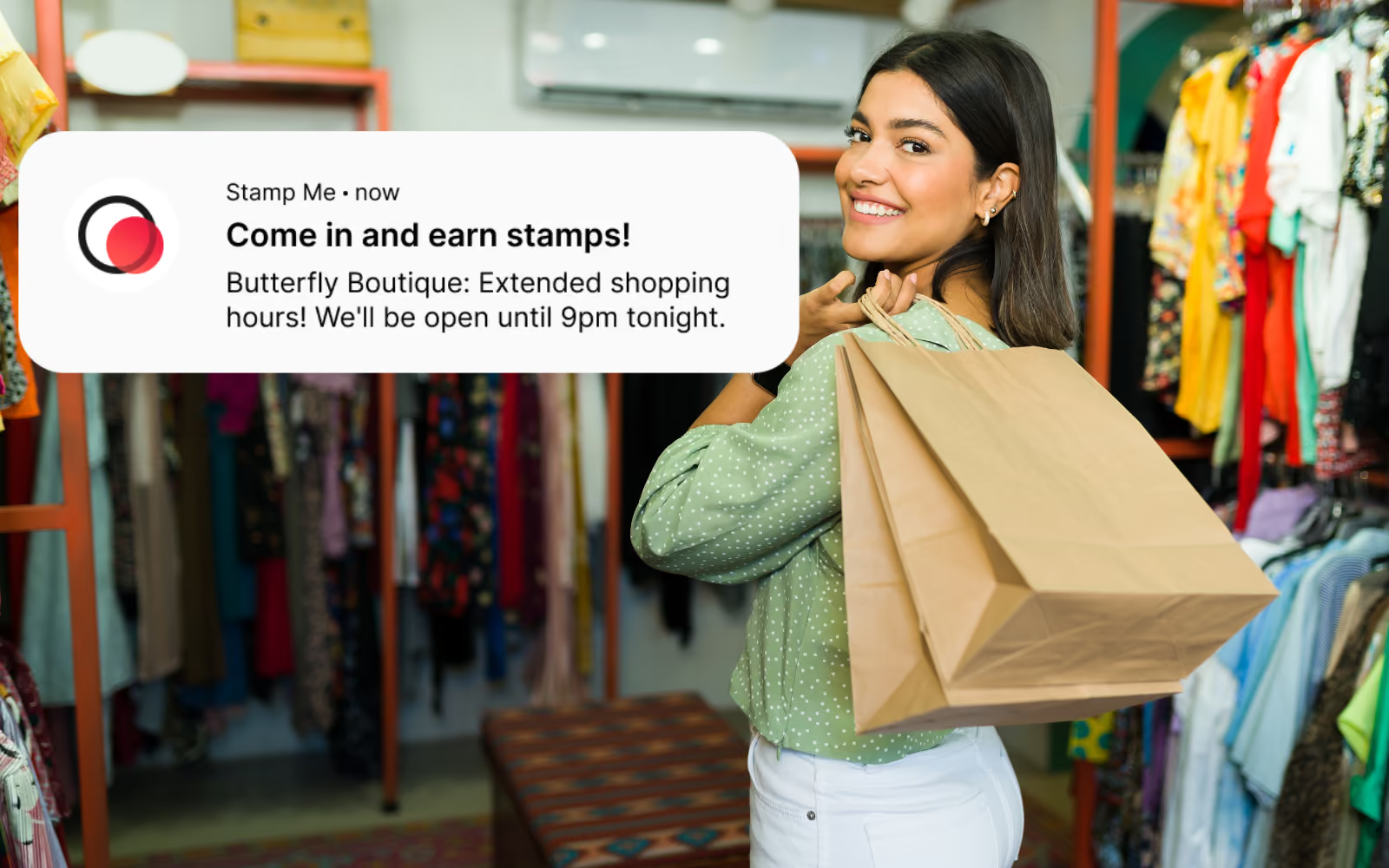
If retention is the highest-leverage move available during a quiet period, a loyalty program is what turns that idea into something that actually runs — rather than something that depends on a staff member remembering to send a message.
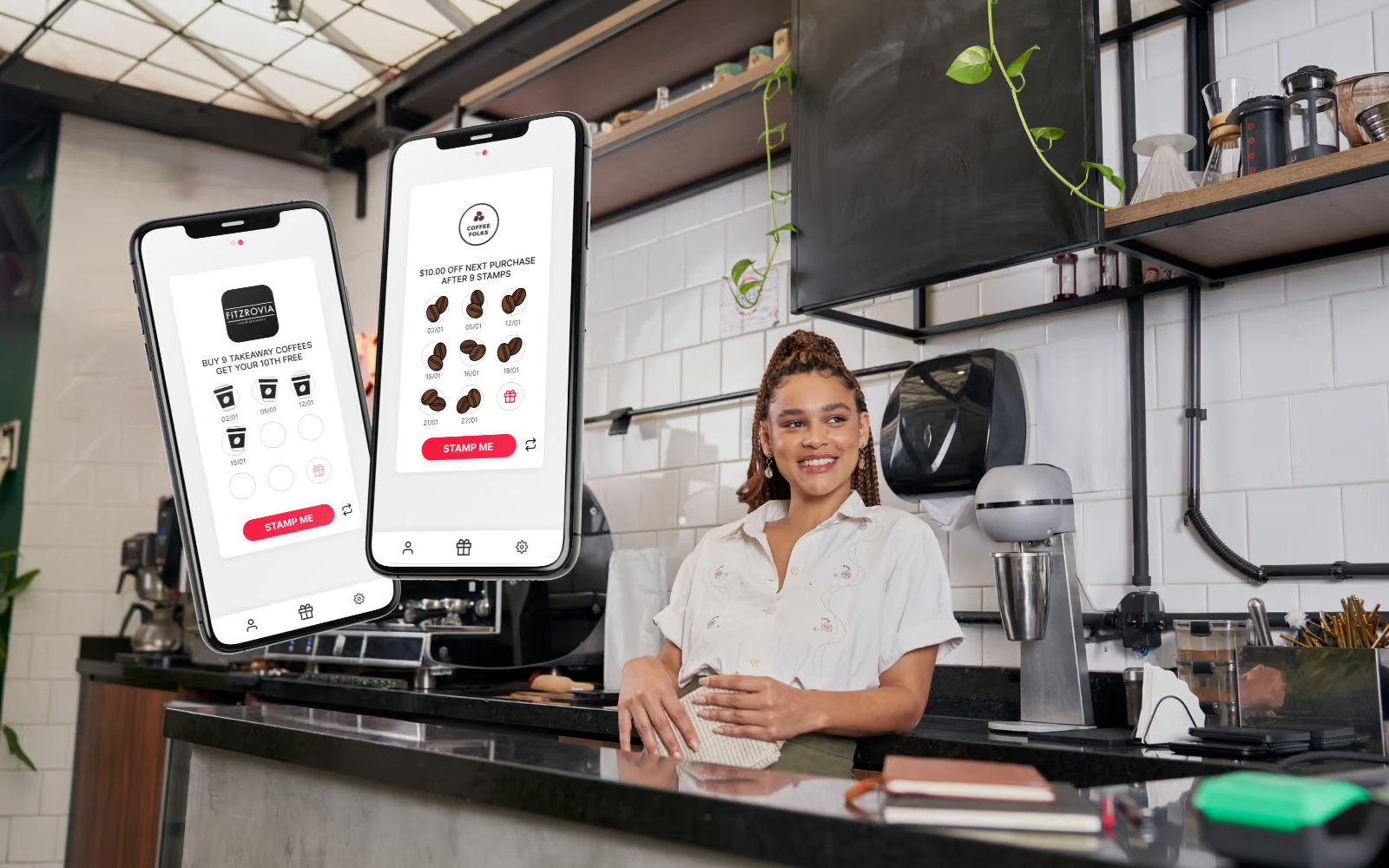
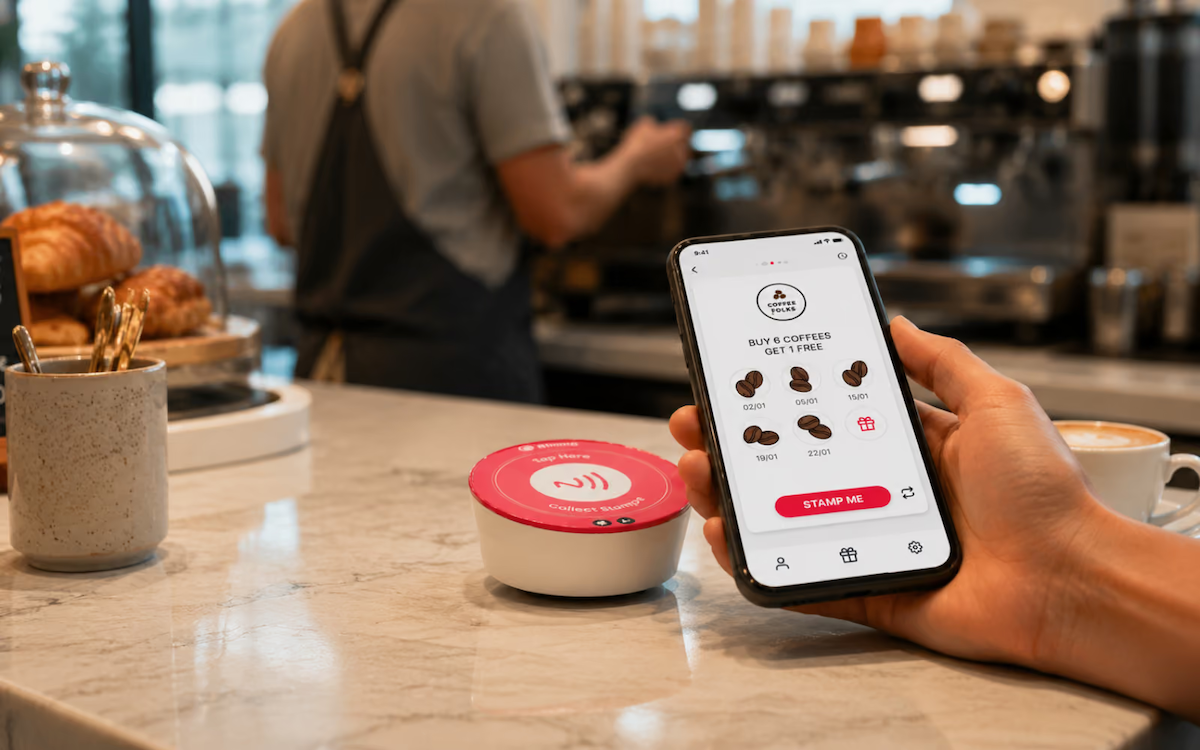
It uses a real psychological pull, not just a discount. Behavioral research describes something called the endowed progress effect: people are more motivated to finish a task once they feel they've already made progress toward it. A customer sitting at seven stamps out of ten doesn't need convincing to come back — the visible progress does the convincing for them. That's a stronger pull during a slow season than a generic percentage-off deal, because it taps into momentum the customer already feels is theirs.
It automates the targeting. Rather than guessing who to reach out to, a loyalty platform can flag exactly which members have gone quiet, which are one visit from a reward, and which are worth a personal nudge — turning the staff outreach idea from Step 2 into something systemized instead of ad hoc.
It lets you run near-zero-cost campaigns to a warm audience. Paying for new customer acquisition during a slow season is expensive and low-converting, as the numbers above show. A loyalty program flips that: bonus stamp campaigns, double-visit days, or scratch-and-win style promotions can go out to your existing member base at a fraction of the cost of paid acquisition, because you're not paying to find the audience — you already have it.
It protects margin better than a blanket discount. A reward tied to genuine repeat behavior only pays out to customers who were coming back anyway — you're just giving them a reason to do it sooner, during the exact weeks the revenue matters most.
It's also the most effective channel for selling forward. SMS and push notifications to loyalty members consistently outperform broader channels for moving forward-dated gift cards and bundles ahead of the next peak season — the audience is already warm and already opted in.
It bridges naturally into the staffing pillar. Those redirected staff hours from Step 2 don't have to be spent only on outreach. Slow season is also the right window to clean up the member database, review redemption data from the last peak, and start planning the next campaign — quiet-season admin work that pays off the moment demand returns.
This is exactly the kind of retention engine Stamp Me is built for — automated segmentation, targeted campaigns, and reward mechanics that keep the endowed progress effect working in the background, even during your quietest months.
Slow Season Readiness: A Quick Self-Check
Before your next quiet period hits, ask:
- Do I know my exact slow-season revenue shortfall in dollars — not just a general sense that "it gets quiet"?
- Have I set aside a specific reserve from this year's peak season for the next slow one?
- Do I have a credit line in place before I need it, not after?
- Is my staffing plan built around reduced hours and cross-training, rather than layoffs?
- Do I have an actual system — not just an intention — for reaching out to lapsed and high-frequency customers?
- Is my loyalty program still active during slow months, or does it go quiet along with everything else?
If more than two of these are a "no," that's your starting order — beginning with the cash flow forecast, since the other four depend on having room to breathe while you fix them.

Engage Your Customers During the Slow Season
A slow season is predictable, which means it's manageable. The moves that actually work aren't about eliminating the dip— they're about funding it in advance, protecting your team instead of scrambling to rehire, and spending marketing energy on the customers who already trust you rather than chasing new ones at a premium.
If you're still working out how to survive slow season small business cycles year after year, start with the customers already in your database. They're cheaper to reach, more likely to say yes, and — with the right loyalty program running in the background — they're the reason a slow season stays a dip instead of becoming a crisis.
Ready to keep your existing customers engaged through every slow season? See how Stamp Me's automated loyalty campaigns can do the outreach for you.

Enter a few details based on typical customer behaviour to estimate the revenue uplift and ROI a loyalty program could deliver.





.webp)