
Loyalty Program Not Working? Here’s Where to Look First
If your loyalty program isn’t working the way you expected, you're not alone — and you're asking the right question. Loyalty programs are powerful tools for retention, but only when designed and executed well. Here’s how to identify what’s going wrong and how to fix it.
According to Capgemini, companies spend approximately $2 billion a year on loyalty programs – and that’s just in the United States alone. And yet, 77% of loyalty programs that solely rely on a transactional model fail within their first two years.
When trying to understand why your loyalty program isn’t working as intended, it’s important to remember that "not working" can mean different things.
Is your program struggling to get signups? Are you getting plenty of signups, but not seeing a boost in repeat visits or revenue? Are customers signing up but quickly disengaging?
These are all signs of a loyalty program that needs attention. Let’s explore the most common reasons loyalty programs stop delivering results – and how to fix them.
1. The rewards are either unappealing, or unattainable

If your loyalty program isn’t grabbing attention, your rewards may be misaligned with your customer base or require too much effort to earn.
Consider reducing the amount of transactions or total spend amount required in order to redeem the reward, and see if this drums up a little more enthusiasm among your customers. If this doesn’t work, you might need to reassess what rewards you are offering – perhaps your customers would be enticed by completely different rewards altogether.
2. Customer data isn’t being used effectively

It’s one thing to collect and store customer data through your digital rewards platform, but if you don’t use this data to its full potential, there’s not much point!
Despite having access to a wealth of valuable data such as what customers are purchasing, how often they are making transactions and numerous other data points that can provide actionable insights; countless loyalty programs fail because this data is going to waste.
Is your business using this information to segment customers into groups, thereby allowing you to send highly targeted communications for a more personalized experience?
When used properly, the data acquired through loyalty programs can provide customers with a tailored shopping experience that strengthens their emotional connection to the brand.
Personalization allows businesses to acknowledge milestones in their relationship with each individual customer, from signup anniversaries to birthdays and more. A small token of gratitude at these milestones goes a long way – not to mention it makes for a far more exciting loyalty program!
Customer data also allows you to recommend products based on each loyalty program member’s preferences, tailor their rewards to accommodate their specific needs and more.
The online shopper can receive “free shipping” perks, while the frequent repeat visitor who typically orders the same thing each time might appreciate a “Buy One Get One Free Offer”, for example.
3. The loyalty program lacks experiential perks and benefits

These days, a decent loyalty program offers both soft benefits and hard benefits.
“Hard benefits” typically refers to discounts, freebies and transactional prizes, whereas soft benefits can be anything from skip-the-queue perks and airport lounge access, to in-app payments for quicker service and exclusive invitations to product launches and other industry events.
The hard benefits might make up the core concept of your loyalty program, but it’s the soft benefits that keep people coming back. They provide social currency, and they allow you to stand out from your competition.
Regardless of what type of business you have and what your customer base looks like, every company can benefit from incorporating experiential perks and benefits into their loyalty experience.
A few years ago, Virgin Money started providing its customers with luxurious lounge spaces where they could enjoy complimentary refreshments while they read newspapers and magazines, accessed free wifi and watched TV. These lounges resulted in a rapid uptick in brand loyalty, as well as a 200% increase in sales at nearby Virgin stores.
For inspiration on what your business could be doing, here are some highly effective techniques for boosting loyalty with VIP perks and benefits.
4. The omnichannel experience is fractured or non-existent
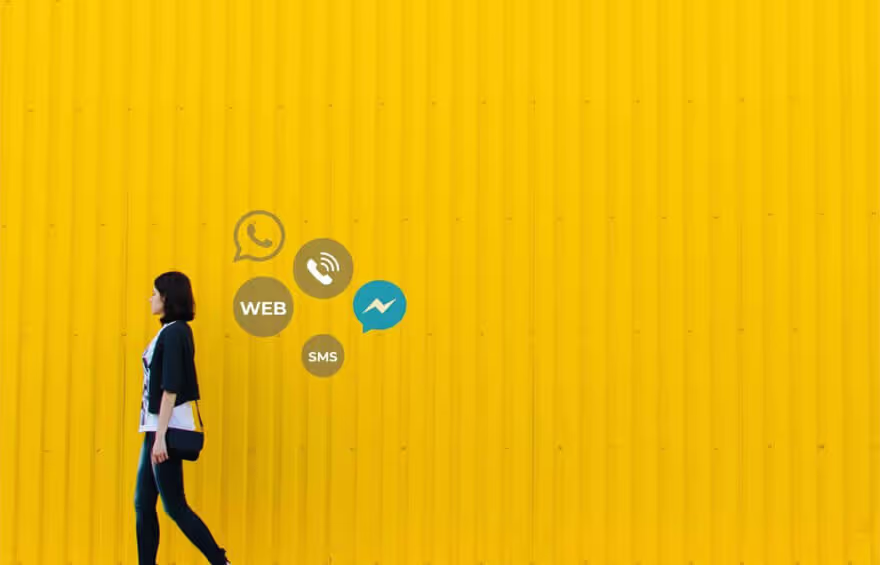
In a nutshell, omnichannel engagement means customers can interact with your brand via your in-store staff, website, social media channels, over the phone and numerous other mediums seamlessly; jumping from one channel to another with no gaps or faults in the customer experience.
A digital loyalty program throws another means of engagement in the mix (especially if you are utilising a mobile app), which means it needs to be flawlessly integrated with these other channels.
As an example, a loyalty program with good omnichannel engagement might allow customers to accrue loyalty points for an in-store purchase, and then accrue some bonus points via sharing branded content on social media later via their laptop, before jumping into the digital loyalty app and redeeming a reward in exchange for their accumulated loyalty points a few days later.
Three-quarters of customers expect the brands they shop with to provide smooth and consistent omnichannel engagement. A state-of-the-art rewards platform will take care of this process for you, ensuring proactive omnichannel engagement for a seamless customer experience.
5. Customers aren’t fully aware of what your loyalty program offers

If customers are unclear on how your program works, they’re unlikely to use it.
While it’s easy to get carried away with exciting ideas for add-ons, bonus referral rewards, Scratch & Win campaigns and other side promotions, it’s crucial that customers have a clear understanding of how the program works at all times.
Miscommunication and lack of simplicity are two factors which often play a key role in diminishing customers’ interest in a loyalty program – even one that offers good value.
A straightforward “Buy X, Get Y” model should be at the core of your rewards offering, and then you can build in extra features and incentives from there. That’s how Starbucks Rewards operates, and 20 million members can’t be wrong!
6. Customers are dissuaded by a cluttered or overwhelming user-interface
If you’ve browsed Netflix or gone grocery shopping at ALDI lately, you might have noticed something – simplicity sells.
And by simplicity, I don’t necessarily mean stripping things down to the basics. In loyalty marketing, simplicity refers to
- Clarity in brand messaging
- Honesty and transparency in your brand’s values
- Relevance in regards to the customer experience
So in much the same way that businesses need to be clear and concise about what their loyalty program offers and how the process works, your loyalty program should be as straightforward to look at as possible.
From fast food restaurant menus to ecommerce stores and digital loyalty apps – a sleek, minimalist design works best.
7. Failure to stay ahead of emerging trends and techniques in loyalty

“Keep up or get left behind” is a mantra that’s applicable to many industries – and loyalty marketing is no exception. With constantly emerging technologies and innovative approaches to customer retention and engagement, no loyalty program is ever perfected.
Complacency is the enemy of a loyalty program’s success – so be sure to keep a close eye on what’s happening in loyalty marketing, and regularly audit your own loyalty program to ensure 100% efficiency.
8. Lack of fun and engaging elements to provide “thrills”

Gamification involves taking ordinary processes (like exercising, learning another language, or ordering a pizza) and applying game aspects to them, resulting in a more fun and engaging experience.
When it comes to loyalty programs, there’s no limit in the ways you can inject gamified functions to boost engagement and retain more customers.
Surprise and delight is another tried and tested strategy that involves catching your loyalty program members off-guard with “random” gifts and tokens of gratitude that can be built into the loyalty journey at predetermined increments to enhance the customers’ brand experience.
9. Poor program promotion and loyalty marketing campaigns
Businesses that create a loyalty program and then neglect to…
- Add a “loyalty program” webpage to their website
- Email their subscribers list about it
- Make a few announcements on social media
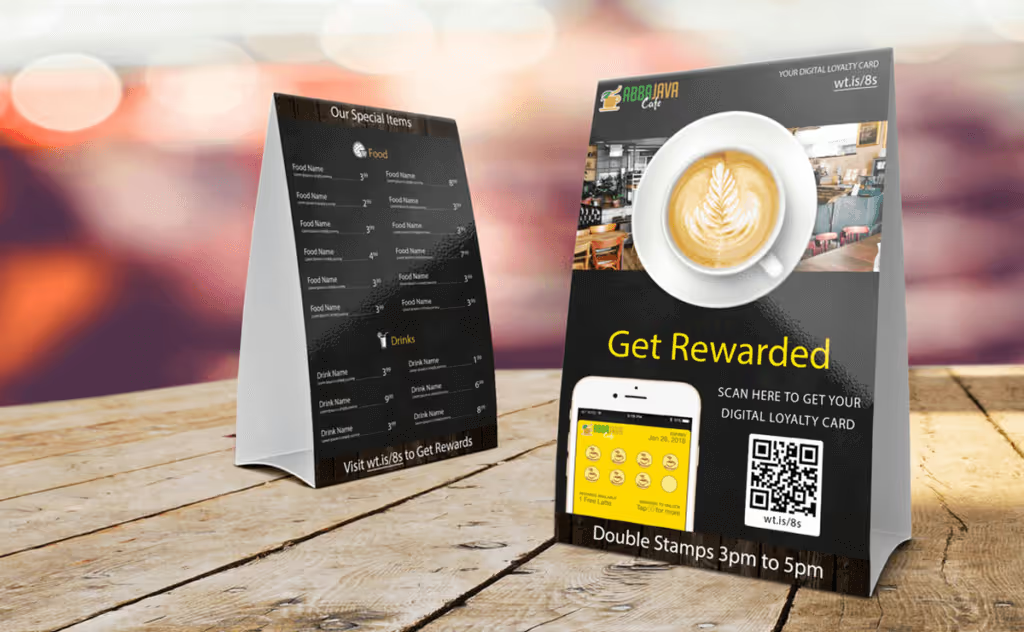
- Introduce in-store signage (if applicable)
- Train their staff on how the program works
...are setting themselves up for failure from the beginning. However, if you have done these things and found that you’re still not enjoying the engagement you were hoping for, there are some other useful techniques you can employ, such as:
- Offer an upfront signup incentive to get the ball rolling on registrations
- Reward existing members for referring their friends
- Keep a pile of join cards to place in product packaging, bagging or with receipts
10. Failure to provide customers with a convenient mobile loyalty app
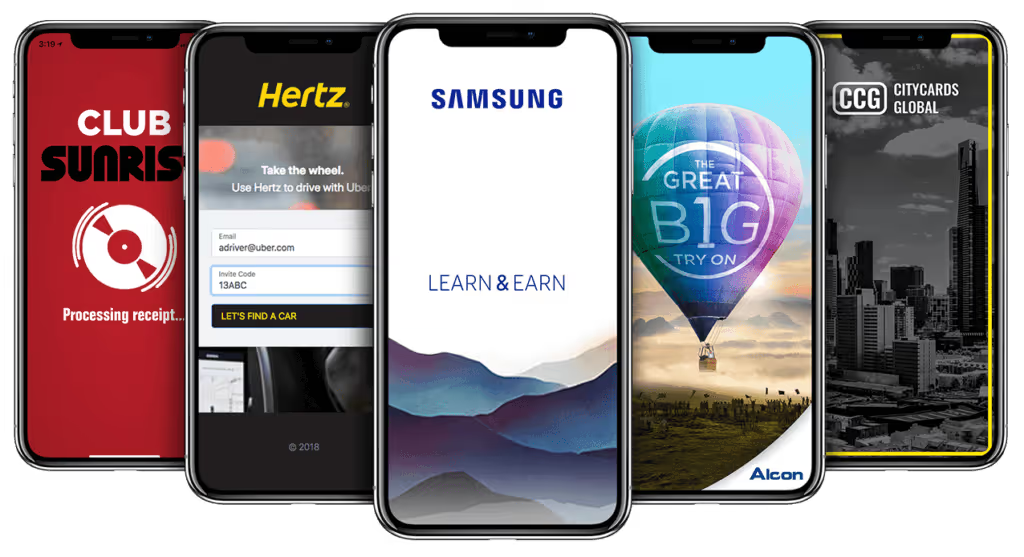
If you're still wondering why your loyalty program isn't working, then of all the reasons listed above, a digital loyalty app resolves many of them in one fell swoop.
For instance, a digital loyalty app enables omnichannel engagement via a user-friendly interface with simplistic design, while easily incorporating functions like gamification and Surprise & Delight.
Meanwhile, a state-of-the-art rewards platform leverages customer data to provide loyalty program members with an optimised customer experience that caters for their unique needs.
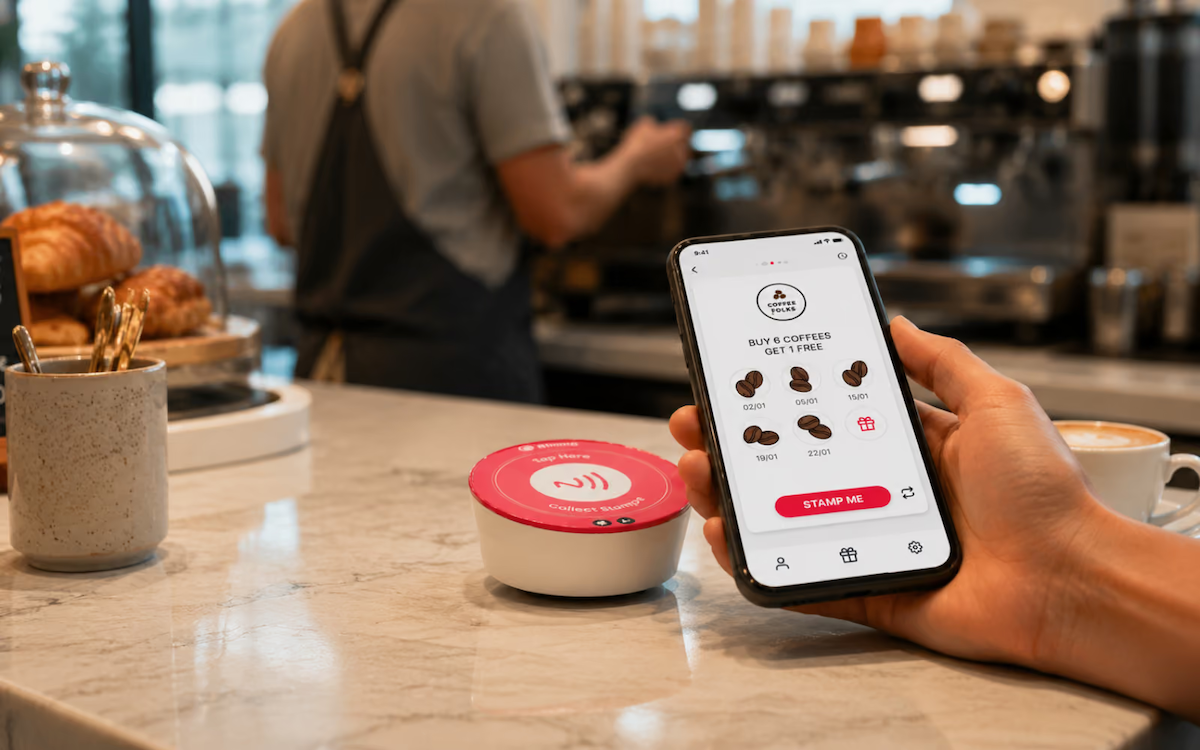
As for emerging trends and techniques in the industry – Stamp Me will take care of that for you, as we are constantly on the lookout for new and innovative ways to enhance our loyalty app for increased engagement.
Why do businesses fail to offer loyalty programs that meet their customers’ needs?

That’s the real question you should be asking. Because in the history of loyalty marketing, no rewards program that fully satisfies its customers’ needs has ever failed.
A recent Capgemini study revealed that a staggering four out of five brand executives believe their business understands its consumers’ emotional needs, while only 15% of consumers are satisfied with the emotional connection that brands establish.
Asking for feedback is a quick, cheap and easy way to avoid this pothole, and ensure that your loyal customers aren’t teetering on the edge of becoming lapsed customers.
By finding a balance between rational incentives (like price, value and convenience) and emotional incentives (like respect, reciprocity and recognition), you can create a well-structured loyalty program that exceeds your customers’ expectations and secures their loyalty.

Enter a few details based on typical customer behaviour to estimate the revenue uplift and ROI a loyalty program could deliver.





.webp)