
A U.S. Small Business Owner's Guide to Planning Seasonal Campaigns Without Guessing

Seasonal campaigns aren't won with a better promotion — they're won with a better timeline. Start planning Christmas 10–12 weeks out, back-to-school 6–8 weeks out, and off-season 4–6 weeks before your slow period hits. Reward existing customers first, then go public.
TL;DR
- Most seasonal campaigns fail from bad timing, not a bad offer
- Christmas, back-to-school, and your off-season each need a different strategy — demand, reactivation, and retention, respectively
- Budget in buckets: ~50% existing customers, ~35% public awareness, ~15% reserve
- Give loyal customers early access before launching publicly
- This is a planning guide, not a promotion guide — works for cafes, salons, gyms, car washes, and other visit-based businesses
Most articles about seasonal marketing for small businesses tell you what promotion to run: a Christmas discount, a back-to-school bundle, a off-season flash sale. Almost none explain what actually determines whether that promotion works — the timing, the budget, the prep, and the follow-up. That's what this guide covers, and the framework applies whether you run a cafe, a salon, a gym, a car wash, or any other visit-based business.
Why Seasonal Marketing Fails Before the Campaign Even Starts
When a seasonal promotion underperforms, most owners assume the offer itself was wrong — the discount wasn't deep enough, the timing was off, the audience wasn't interested. In reality, the outcome is usually decided weeks before a single customer ever sees the campaign. The most common failure points are:
- Planning too late, leaving no runway to prepare stock, staff, or messaging
- Stock arriving late, so the promotion launches without the products or capacity to support it
- Staff who aren't briefed, leading to inconsistent offers or a poor in-person experience
- Budget spent too early on the wrong channels, leaving nothing for the actual launch window
- A promotion that launches before customers know about it, wasting the first and often best days of demand
- No follow-up after the campaign, so new customers acquired during the rush never return
None of these are creative problems. They're planning problems — which means they're preventable with a structured timeline.
The Three Seasonal Moments Every Service Business Should Plan For
Not every seasonal moment calls for the same strategy. Treating Christmas, back-to-school, and your off-season as the same type of event is one of the most common reasons seasonal campaigns underperform.

Christmas: Maximize Demand Without Breaking Your Operation
Christmas is characterized by the highest demand, the highest competition, and the biggest staffing pressure of the year. Stock management becomes critical, and this is the natural window for gift cards and premium offers. The goal isn't simply to capture as much demand as possible — to maximize busy-season demand without damaging the customer experience through long waits, stockouts, or an overwhelmed team. The goal should be focused on how to prepare your small business for the Christmas rush.
Back-to-School: Rebuild Habits, Not Just Traffic
Back-to-school has a fundamentally different objective. As routines return after summer, this is the ideal window to reactivate existing customers, restart memberships, refill appointment books, and rebuild visit frequency. It's less about attracting strangers and more about re-engaging people who already know you but have drifted out of the habit of visiting.
The Off-Season: Shift From Selling to Retaining
Every business has a quieter stretch — for some it's summer, for others it's January, a slow Tuesday afternoon in February, or a lull unique to their industry. Whenever yours lands, the wrong question is "How do we sell more?" The better question is "How do we keep customers coming back until demand returns?" That shift in framing changes the entire strategy — the focus moves to retention, cash flow stability, advance bookings, and strengthening customer relationships rather than chasing new volume.
When Should You Start Planning Seasonal Marketing?
Timing is the single most controllable variable in seasonal marketing for small businesses — and it's the one most businesses get wrong. As a general framework:
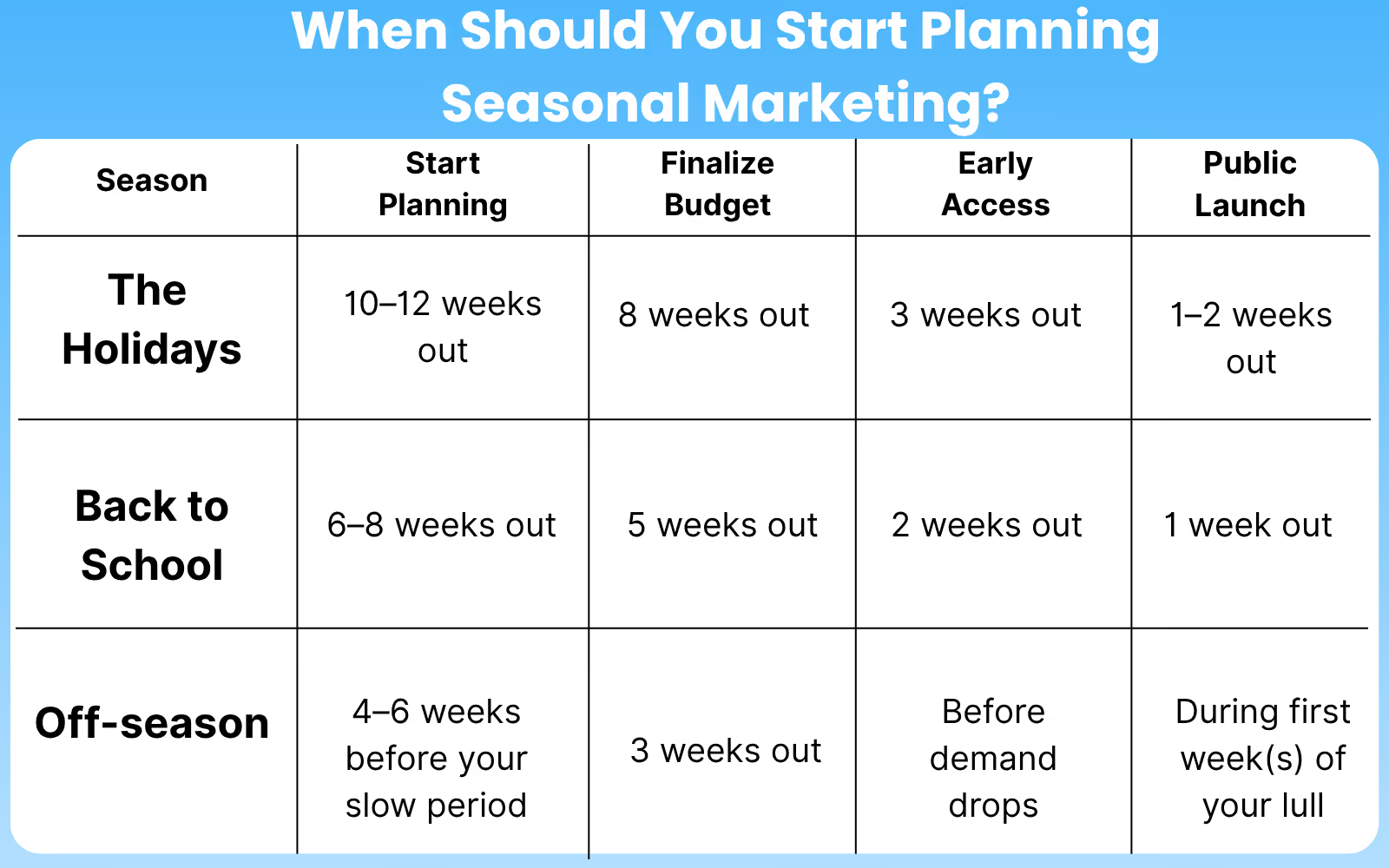
Why Christmas needs the longest runway: stock has to be ordered and received, staff schedules need to be locked in well ahead of the busiest weeks, and premium offers or gift card programs take time to design and promote properly.
Why back-to-school moves faster: you're largely reactivating an audience that already knows your business, so the awareness-building phase is shorter — but the reactivation messaging still needs a lead-in period to reach people before their routines fully reset.
Why off-season planning starts before the slowdown hits: retention campaigns are far more effective when they reach customers before their visit frequency drops, rather than trying to win them back after they've already gone quiet. Track your own booking or sales data to identify when your slow stretch typically begins, then work backward from there.
How Much Should a Small Business Spend on Seasonal Marketing?
There's no universal dollar figure that fits every business, so rather than offering false precision, it's more useful to think in budget "buckets":
50% — Reward existing customers. Bonus visits, loyalty rewards, and VIP previews for the people who already support your business.
35% — Public awareness. Social media, local advertising, signage, email, and Google Business Profile updates aimed at reaching new and lapsed customers.
15% — Reserve. Held back and deployed after the season for unexpected opportunities, unplanned slow periods, or customer win-back efforts.
The exact percentages will shift depending on your business type and goals, but thinking in buckets — rather than channel by channel — helps prevent the most common budgeting mistake: overspending on visibility while under-investing in the customers who are most likely to actually return.

What Seasonal Marketing Mistakes Do Small Businesses Make?
Even experienced owners repeat the same seasonal missteps year after year. The most common ones include:
- Starting the planning process too late to prepare stock, staff, or messaging properly
- Spending the entire budget on paid ads and leaving nothing for existing-customer rewards
- Ignoring existing customers in favor of chasing new ones
- Running discounts without a clear goal — is this about volume, cash flow, or reactivation?
- Forgetting post-season retention, so hard-won new customers never come back
- Measuring only revenue instead of tracking repeat visits, which is a better indicator of long-term health
- Reusing the same campaign every year without reviewing what actually worked
Avoiding these mistakes matters more than picking the "perfect" promotion, because a well-timed, moderately good offer will consistently outperform a great offer that launches too late or targets the wrong audience.

Holiday Season Ideas by Business Type
Every business type needs a slightly different holiday playbook. Here are quick ideas to adapt:
Cafes & Coffee Shops
Seasonal promotions for cafes could look like…
- Limited-time seasonal drinks or menu items to create urgency
- Gift card bonus promos (e.g., buy a $50 card, get a $10 bonus)
- Double-punch loyalty days during peak weeks
- Holiday packaging or cups designed to get shared on social media
Restaurants
Seasonal promotions for restaurants could look like…
- Pre-orders for holiday meals, platters, or catering
- Private party and group booking packages
- Gift certificates bundled with a future-visit incentive
- Staff-recommended specials to move higher-margin items
Salons & Spas
Seasonal promotions for salons could look like…
- Heavy gift card promotion — December is peak gift-card season
- Holiday-ready bundles (blowout + manicure, facial + massage)
- Book-ahead incentives for January to soften the post-holiday lull
- "Bring a friend for holiday glam" referral bonuses
Gyms & Fitness Studios
Seasonal promotions for gyms could look like…
- Early-bird "New Year starts now" membership offers
- Gift a membership or class-pack as a holiday gift card option
- Holiday drop-in passes for visiting family and friends
- Loyalty rewards for members who stay consistent through December
Car Washes
Seasonal promotions for car washes could look like…
- Gift card bundles for holiday road-trip prep
- Push toward unlimited wash club sign-ups before travel season
- Bonus washes for existing loyalty members
- "Clean car for holiday guests" seasonal messaging
Where Loyalty Marketing Fits Into a Seasonal Campaign
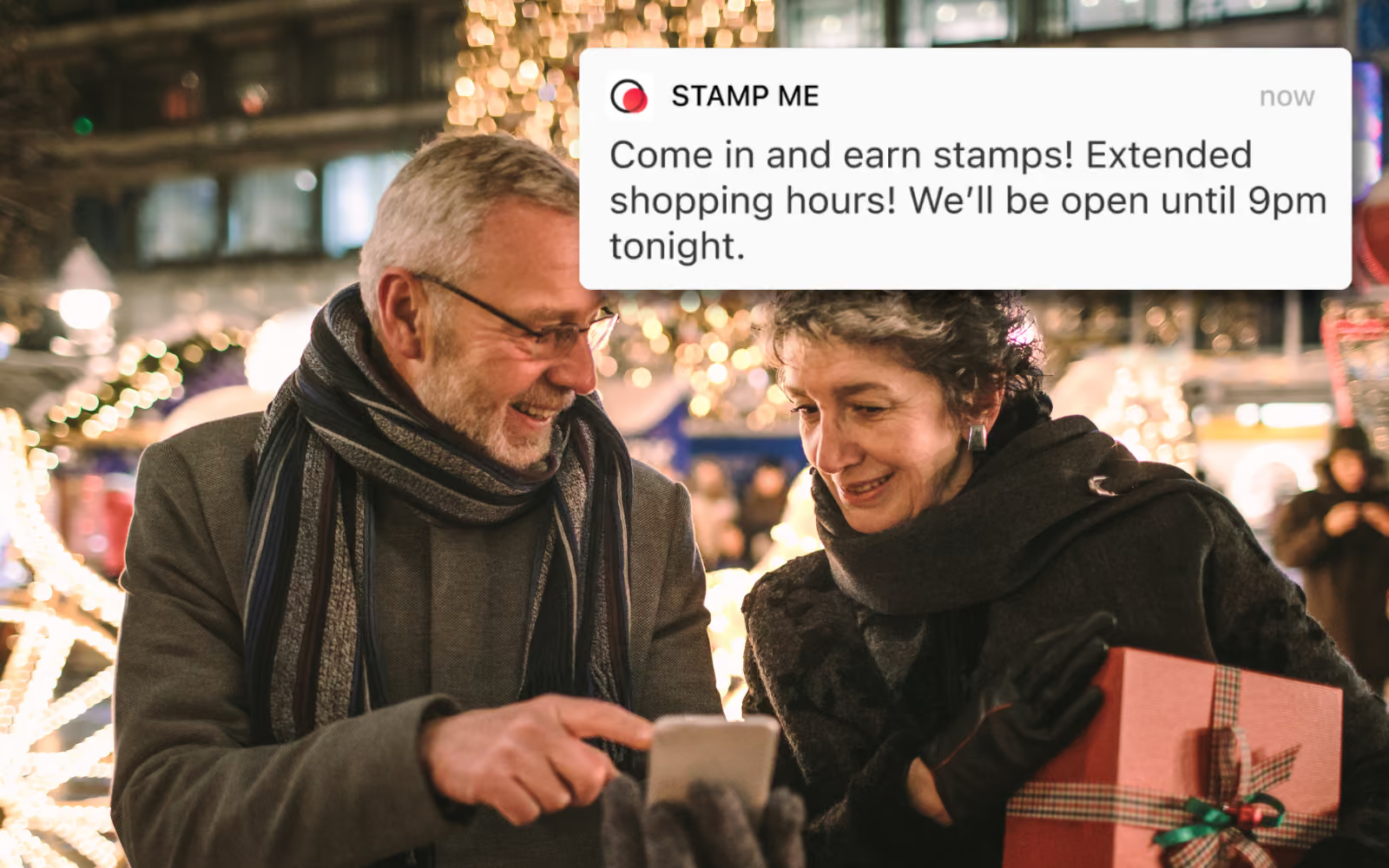
A seasonal campaign shouldn't launch to everyone at once. A more effective sequence looks like this:
Regular customers → Early access → Learn what works → Improve the campaign → Launch publicly → Retain new customers afterward
This sequence matters because your existing, loyal customers are the lowest-risk group to test a new offer on. Their response tells you what's working before you spend your public-awareness budget, and rewarding them first — rather than last — reinforces the relationship that keeps them coming back.
This works across several channels together, not any single one in isolation: a loyalty app, email, SMS, Google Business Profile, social media, in-store signage, your website, and staff recommendations at the point of sale. No single channel carries the whole campaign — they reinforce each other.
Preparing for a Slow Season Requires a Different Strategy
The core idea to hold onto: busy seasons are about demand, slow seasons are about retention. Trying to run a slow-season campaign with a busy-season mindset — heavy discounting to chase volume — often erodes margin without solving the underlying problem, which is keeping existing customers engaged.
Practical moves that work well during a slow season include:
- Encouraging pre-bookings to lock in future revenue
- Selling packages or bundles that commit customers to multiple future visits
- Scheduling reminders to bring lapsed customers back
- Launching bonus-visit campaigns tied to a loyalty program
- Cleaning up your customer database so future campaigns reach real, engaged contacts
- Retraining staff on upselling and customer experience during quieter shifts
- Updating rewards to keep the loyalty program feeling fresh
- Refreshing your Google Business Profile with current hours, offers, and photos
- Improving the overall customer experience while volume is lower and there's more time to focus on it
Your Seasonal Campaign Planning Checklist
- Set goals
- Confirm budget
- Order stock
- Train staff
- Prepare loyalty campaign(s)
- Prepare social posts
- Update Google Business Profile
- Launch early access
- Launch public campaign
- Review results
Plan the Season Before It Plans Your Results
Seasonal campaigns aren't won because of one great promotion. They're won because a business planned early, budgeted deliberately, prepared its staff, rewarded regular customers first, coordinated multiple marketing channels, and stayed focused on retention after the campaign ended.
The businesses that do this well aren't reacting to the calendar — they're a few weeks ahead of it, every time.
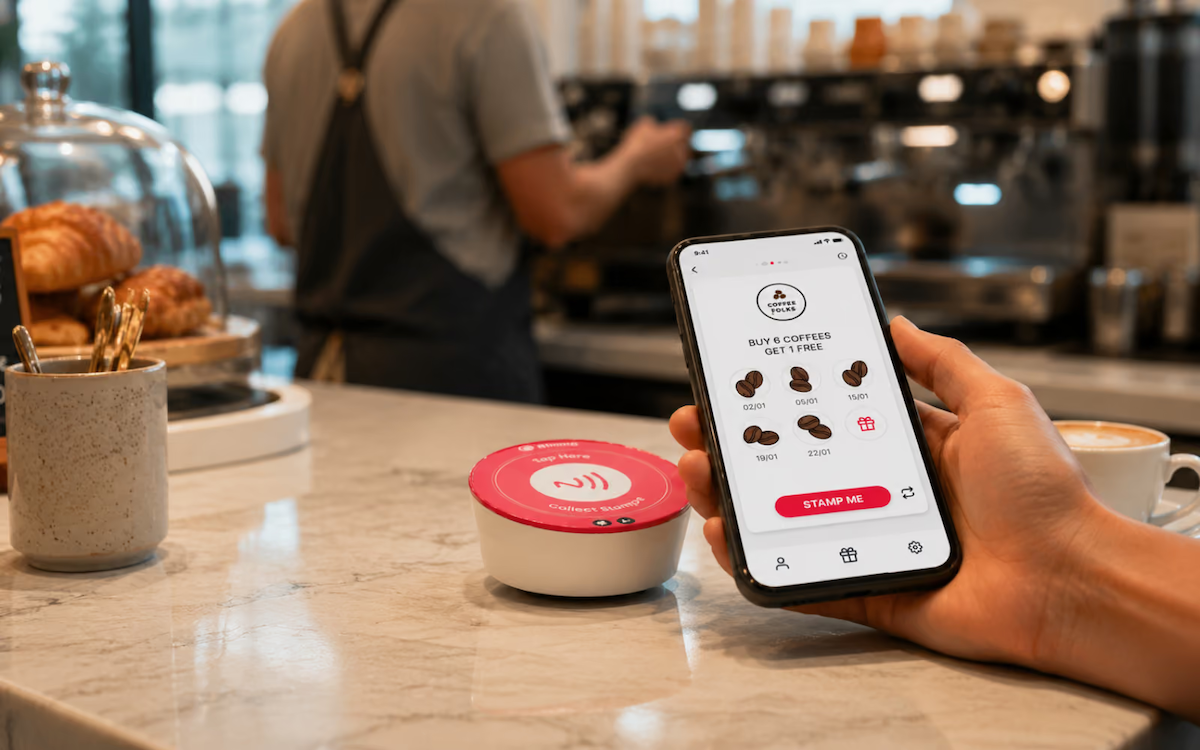
Start with the people who already show up for you. A loyalty app like Stamp Me makes it easy to give your regulars early access or bonus rewards before your wider campaign goes live — turning your most loyal customers into the momentum that carries the rest of the season. Pair it with email, social, in-store promotion, and local marketing, and you're not guessing when the next rush (or lull) hits. You're ready for it.

Enter a few details based on typical customer behaviour to estimate the revenue uplift and ROI a loyalty program could deliver.





.webp)