
How to Use Your Loyalty Program Data When You Have Multiple Locations

Viewing your loyalty program data as a single business average hides the location-level trends that drive better decisions. Break it down by store, track the right five metrics, and act on what you find — before small problems become expensive ones.
TL;DR:
- Look at loyalty data by individual location, not combined totals
- The five metrics that matter most: active members, repeat visit rate, redemption rate, retention by location, and member growth
- Falling visit frequency or redemption rates are early warning signs of customer drop-off
- A simple monthly location scorecard makes comparing stores fast and consistent
- A digital loyalty platform centralizes all this data and makes it immediately actionable
Most advice about loyalty program data is written for major retailers with dedicated analysts and large reporting teams. If you're running two, three, or five locations, the enterprise playbook doesn't apply — and most of it is overkill anyway.
The good news: you don't need a data science team to extract meaningful loyalty program data across multiple locations. With the right metrics and a clear framework for comparing locations, you can quickly identify which stores are building strong customer habits, where loyalty is slipping, and exactly where to focus your efforts next.
This guide breaks down the customer loyalty analytics and loyalty program metrics that matter most for multi-location small businesses — and how to use them to make smarter decisions.

Why Loyalty Program Data Matters More for Multi-Location Businesses
Running more than one location doesn't just double your customers — it multiplies the complexity of understanding them.
A business with a suburban location and a downtown store is effectively running two different customer behavior experiments at the same time. The downtown location might attract higher visit frequency from weekday commuters; the suburban store might see more weekend visits with higher average spend. Without breaking down your loyalty program data by location, those differences stay invisible.
The real danger of reviewing only combined business averages is that one strong-performing location can mask problems at another. Customer retention issues hide inside overall numbers until they've already cost you significant revenue — and by then, they're much harder to fix.
Better loyalty program performance starts with location-level visibility. A well-structured multi-location loyalty program creates a genuine opportunity to compare stores, benchmark performance, and identify trends before they become problems.

How Do I Analyze Loyalty Program Data Across Multiple Locations?
Start by treating each location as its own business, then look for patterns across all of them.
The first step is straightforward: stop reviewing only your total member count and overall visit numbers. Instead, pull the same key metrics for each location individually — active loyalty members, new member signups, visits per member, reward redemptions, and repeat visit rates.
Once you have these figures side by side, patterns become obvious fast. Store A might have more members overall, but Store B could have significantly better engagement. Store C might be growing its member list but struggling to get those members back through the door a second time.
The difference between useful loyalty program data insights and vanity metrics comes down to this: totals tell you how big your program is, but location-level breakdowns tell you how healthy it actually is. That distinction is where most small businesses leave value on the table.

What Loyalty Metrics Should Small Businesses Track?
These five loyalty program metrics give you a clear, complete picture of loyalty program performance without drowning you in data.
1. Active Members measures overall program health. A growing total list with declining active members signals that people are signing up but not staying engaged — a common trap that looks fine until it isn't.
2. Repeat Visit Rate is your most direct measurement of customer retention. It tracks the percentage of members who have returned more than once within a set period. Low repeat visit rates are a red flag at any location and should be investigated immediately.
3. Reward Redemption Rate shows how engaged your members actually are. Customers who redeem rewards are significantly more likely to keep coming back than those who collect stamps and forget about them.
4. Customer Retention by Location identifies which stores are building the strongest loyalty habits and which are losing customers faster than they're gaining them.
5. Member Growth measures program adoption over time. Sudden drops in new signups often coincide with competitor activity or seasonal shifts and are worth investigating early — not after the quarter ends.
Together, these loyalty program metrics deliver the most actionable view of loyalty program performance available to a small business, without needing a reporting team.
How Do I Identify Customer Drop-Off in a Loyalty Program?
Customer drop-off rarely happens overnight — it shows up in your loyalty program data as a gradual slide before it becomes a serious problem.
The early warning signs to watch for: reduced visit frequency among existing members, falling redemption rates, declining active member counts, and month-over-month reductions in repeat visits.
The most useful comparisons are current month versus previous month, current quarter versus the same quarter last year, and location versus location. When one store's numbers are diverging from the rest, that's where your attention needs to go first.
Once you've identified an at-risk location, the response options are straightforward: targeted promotions for lapsing members, bonus reward campaigns to re-engage light visitors, double stamp days to drive urgency, or win-back messaging for members who haven't visited in 60-plus days. The key is acting on the data quickly. Loyalty data insights only create value when they prompt action — not when they sit in a report.

How Do I Compare Loyalty Performance Between Locations?
Loyalty platforms that cover active members, repeat visits (or repeat visit rate), redemptions, retention rate, and new signups give you everything you need. Review it monthly, identify your best-performing stores, your underperformers, and your fastest-growing locations. Then ask the right question: what are the best-performing stores doing differently?
Ongoing customer loyalty analytics matter more than any single month's results. One slow month could be seasonal. A three-month trend in the same direction is something to act on.
Benchmarking locations against each other over time is where multi-location loyalty program data becomes genuinely powerful — because trends across stores reveal operational and experience differences that single-location businesses simply can't see.

Common Mistakes SMBs Make When Reviewing Loyalty Program Data
Most small business loyalty mistakes aren't about collecting bad data — they're about looking at the wrong things.
Focusing only on total member numbers is the most common error, because high totals can mask poor engagement at the member level. Ignoring reward redemptions is the second — redemptions are your best proxy for genuine customer investment in your program.
Not comparing locations individually lets problems hide inside business-wide averages for months. And waiting too long to act on customer drop-off is the costliest mistake of all — by the time declining loyalty is obvious, winning those customers back is significantly harder and more expensive than keeping them would have been.

Why a Digital Loyalty Platform Makes Loyalty Data More Useful
A digital loyalty platform doesn't just collect loyalty program data — it makes that data visible and actionable across every location.
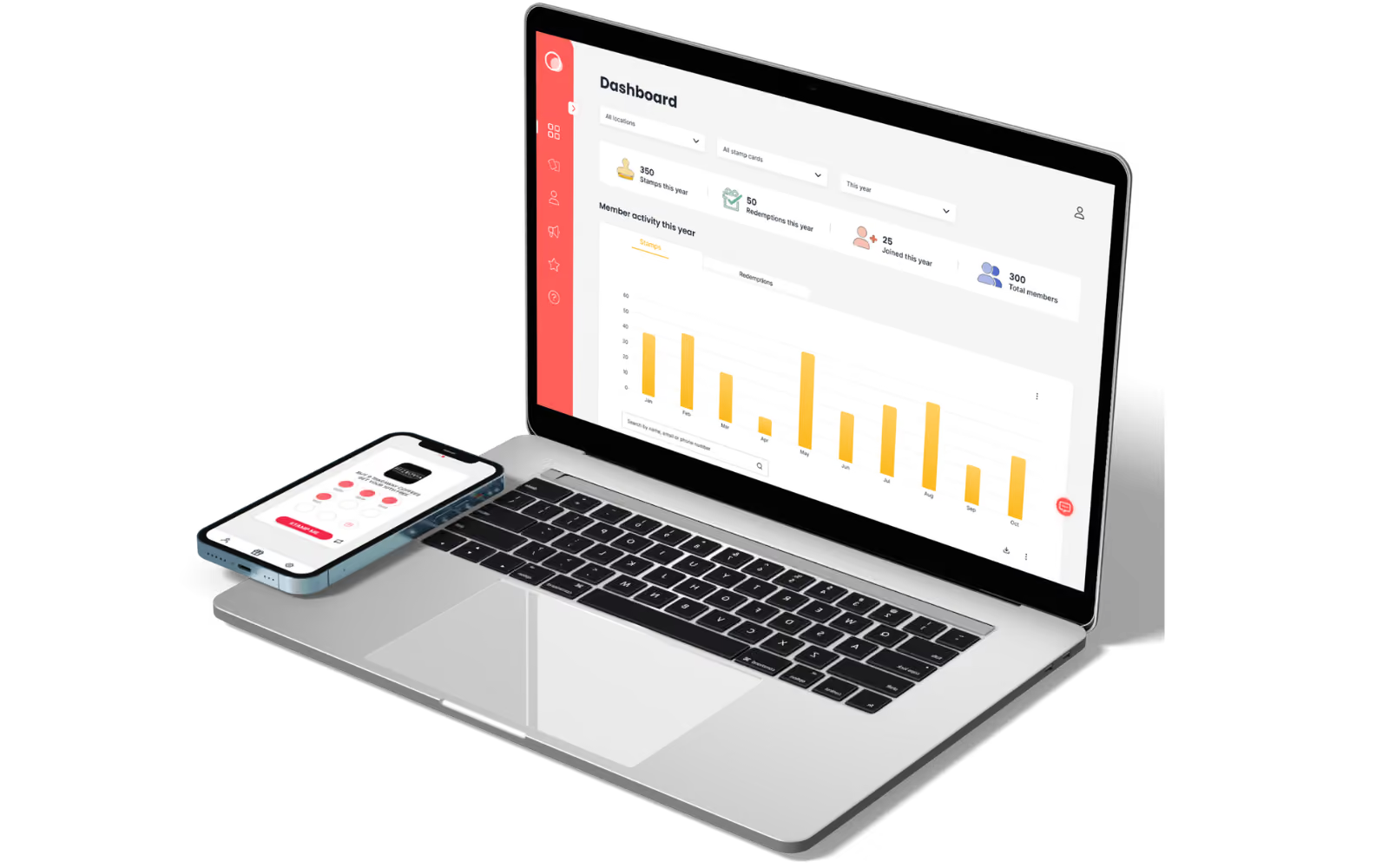
Paper cards and disconnected systems make location-level comparison nearly impossible. A digital platform centralizes customer activity across every store, so you can access clear customer loyalty analytics from a single dashboard without manually compiling spreadsheets after the fact.
This kind of visibility is what allows you to identify your most loyal customers, catch customer drop-off earlier, measure the loyalty program metrics that matter, and make data-driven decisions across your entire business.
Many digital platforms also include automated marketing tools, customer segmentation, targeted offers, and win-back campaigns — converting loyalty data insights directly into repeat visits and revenue. If you're serious about improving loyalty program performance, a digital platform is the foundation that makes everything else possible.
Turn Your Loyalty Data Into Action
Collecting loyalty program data is only valuable when it drives better decisions.
With Stamp Me, multi-location businesses can track customer engagement, compare location performance, monitor reward redemptions, and identify trends that affect retention — all from one place. Instead of guessing which stores are performing best, you can see exactly where customers are most engaged and where action may be needed.
Want to see how it works? Discover how easy it is to turn customer loyalty data into growth with Stamp Me.

Enter a few details based on typical customer behaviour to estimate the revenue uplift and ROI a loyalty program could deliver.






.webp)